Author: bobpeltzer

Marree to Mungerannie and Back Again

May 12 to 14, 2019

Ready for the Track

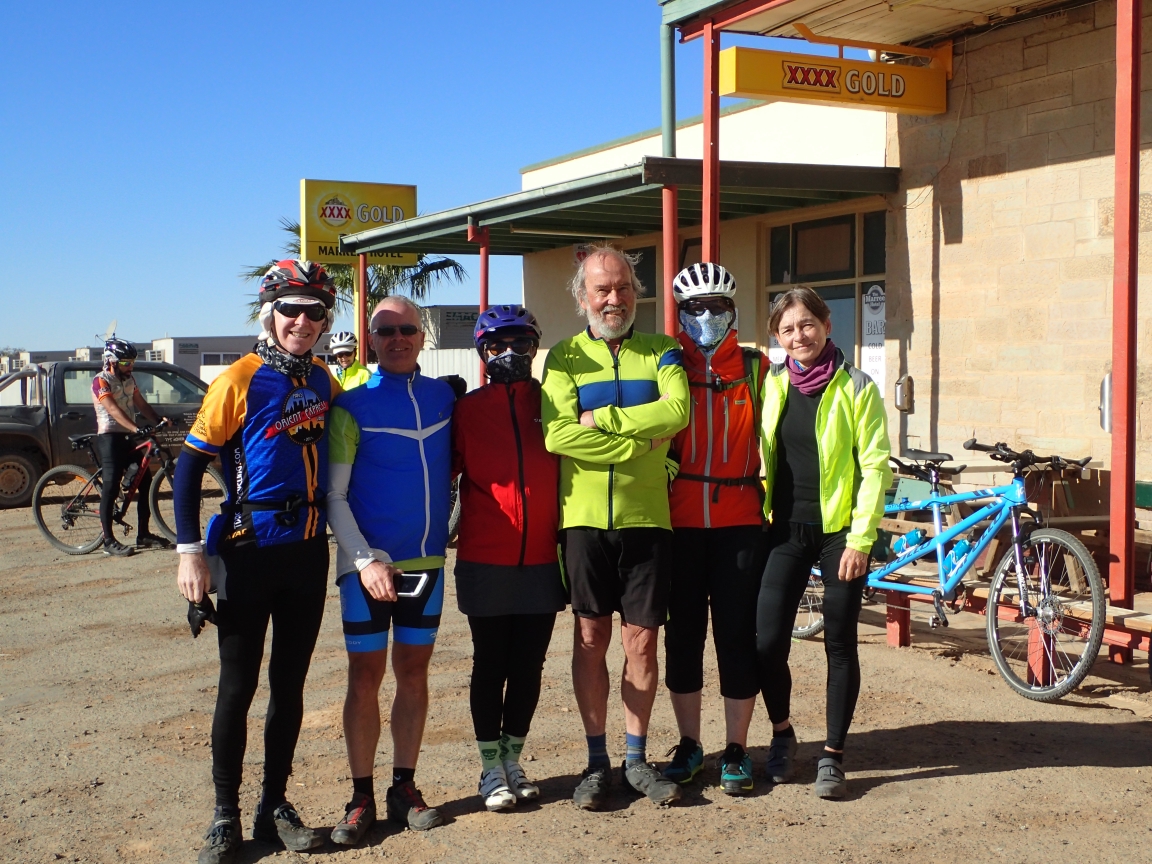
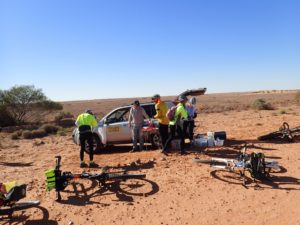
The Birdsville Track is an iconic route across the Australian outback. Once the domain of camel drivers and bullock trains it is over 540 kilometres of rough dirt, stone, sand and gravel road with services ranging from sparse to non-existing. Its most common visitors are the long road trains hauling cattle and sheep, four wheel drive adventurers and the denizens of the lonely cattle stations. Then there are the occasional hardy trekers on bicycles like us. As we left Marree we noted the sign said the road was open to Mungerannie but closed from there to Birdsville. We had a three day ride to Mungerannie and left with hopes that during that time the route beyond would open. A double barrelled flood event had washed out some sections of the road and created a five kilometre wide flooded area as we had some hope that we would be allowed to work our bicycles around the flooded area.
The bikers of yesteryear

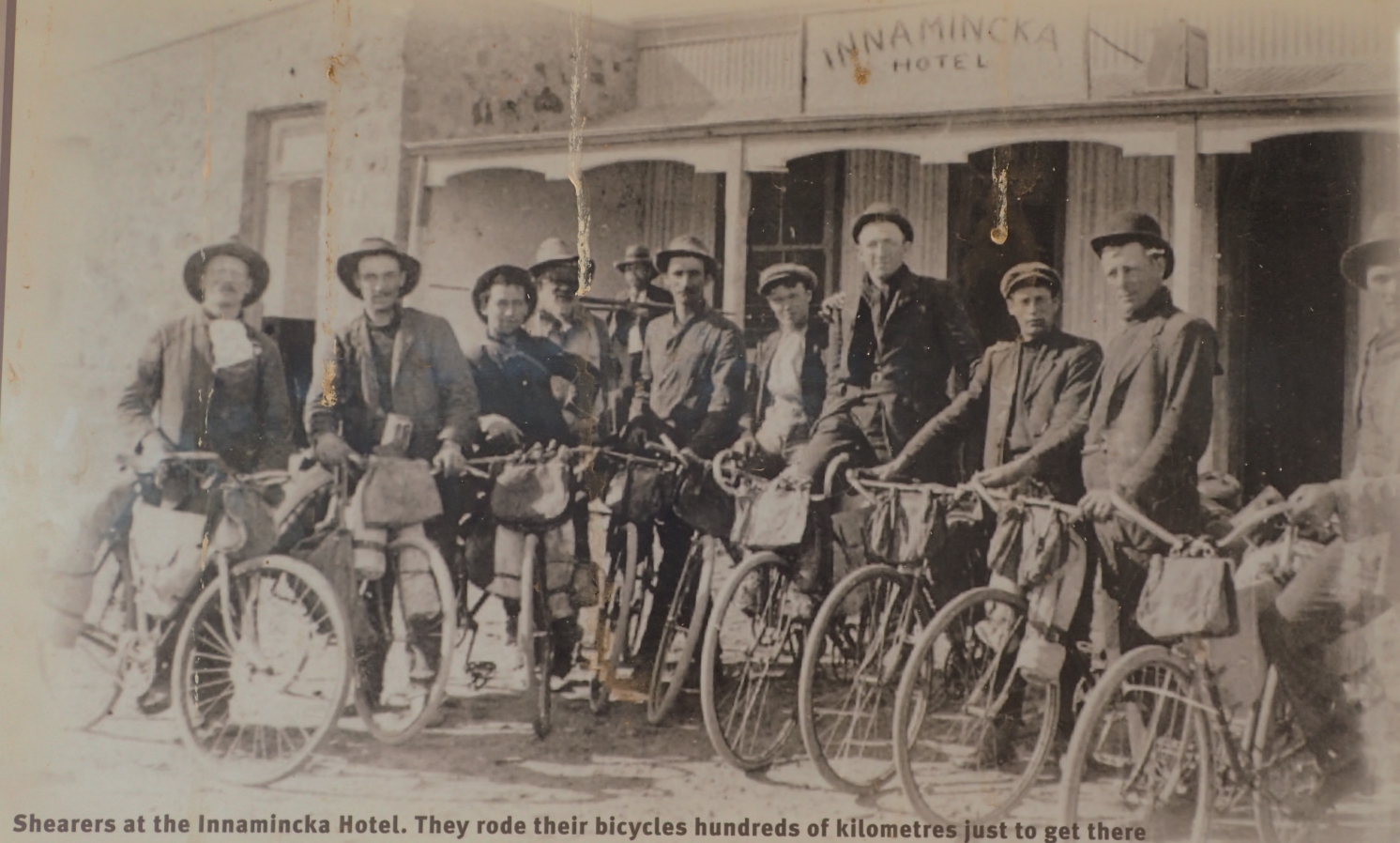
The Birdsville Track is steeped deep in Australian history. Along its route Tom Kruse drove the royal mail through conditions that would have stifled a lesser man. Through these dry lands trekked Wills and Burke on their ill fated journey from coast to coast across the Outback. It is a goal today for many a four wheel drive, cattle station transport, vacationing caravaner and bicyclists such as us. The bicycling tradition in the Outback goes back many years to a time when transient sheep shearers would use them to ride from station to station during the time when wool was being harvested. Our goals are somewhat less ambitious as we will travel better maintained roads and have the luxury of vehicle support along the way.

Outback Hot Tub

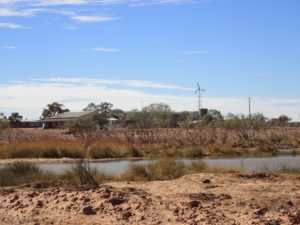
Our first night was spent at an oasis in the Outback where warm water from the aquafier gushed to the surface providing warm showers and hot soaking pool. Flies were everywhere and they swarmed our bodies, not biting but looking for moisture. They are one of nature’s more benign curses. Our shower was from the same hot subterranean source augmented with some cool rainwater from a tank above the shower hut. Unfortunately, when the cold water was turned the entire top of the hut leaked the cool water making it impossible to keep anything above head height dry. A solution was found by putting your dry clothing into a bucket and hanging it from the ceiling near the one dry corner of the hut.
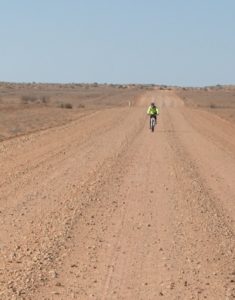
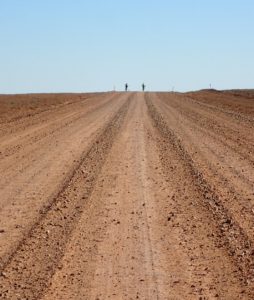
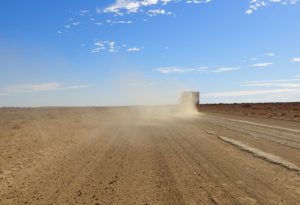
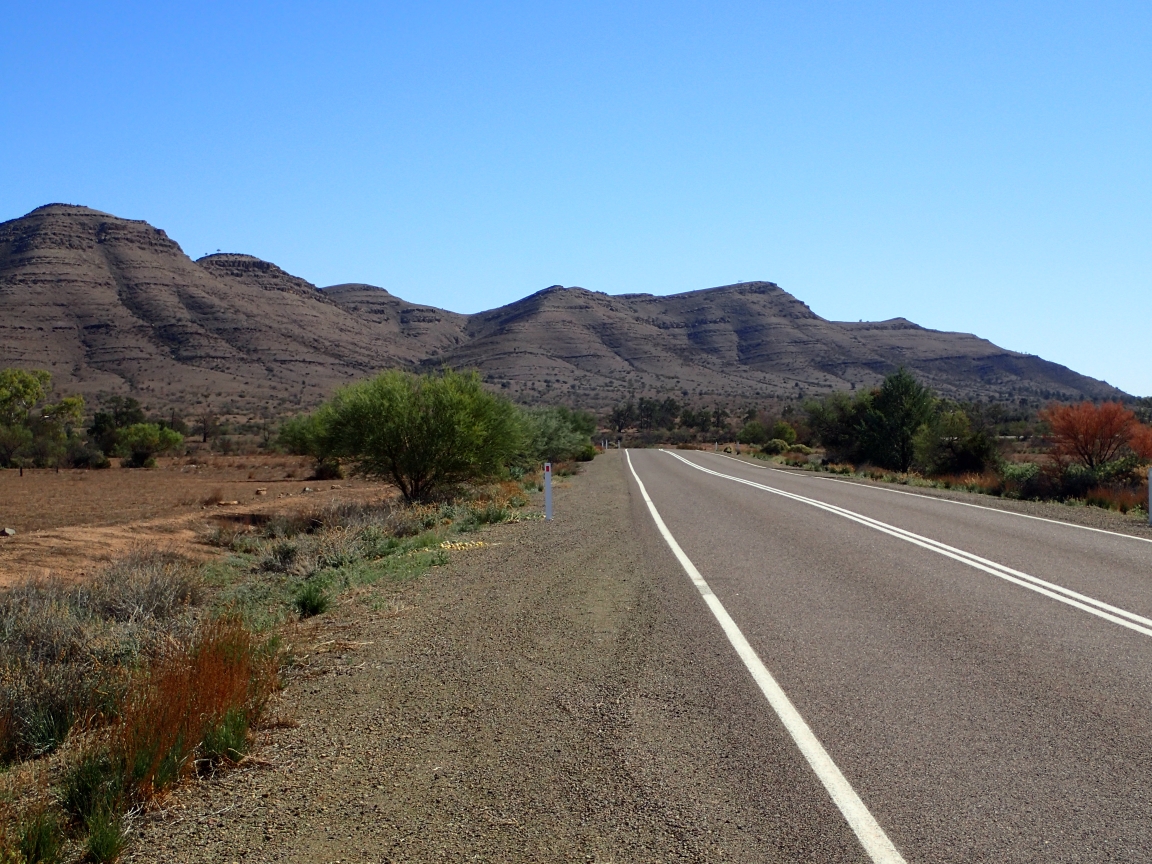
There is a beauty to this large and open land where population is measured not in people per square kilometre but in square kilometres per person and where vegetation and water are sparse. The road is a mix of dirt, sand, rocks with a bit of gravel and clay sprinkled in wherever the road crews think they can spare it. Mostly it is rough and heavily corrugated from the heavy trucks and four wheel drive vehicles that speed along it in a cloud of dust. Outside the wheel tracks the landscape is mostly wide, rock strewn, open spaces with the occasional gum tree and spiky spinfex grass with a clump of cattle thrown in for interest. Andy, our primary bus driver and all around go-to guy calls it, “a brown and rick land.” It is definitely brown and no doubt that it has and continues to make many Australians rich but you better be prepared to carry your own provisions unless you have generations old aboriginal knowledge.
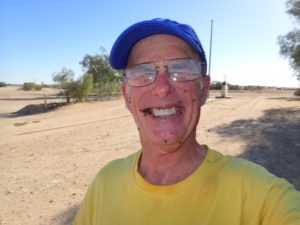
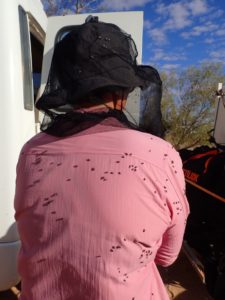
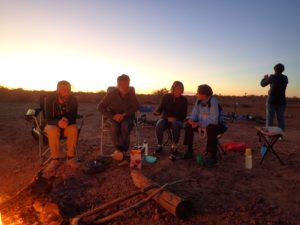
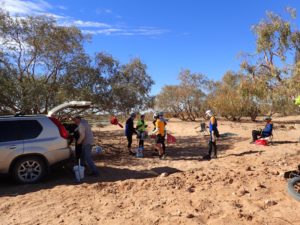
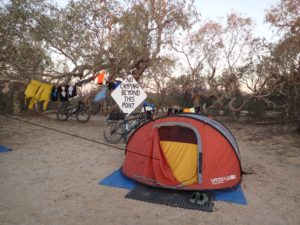
The next day another 80 or so kilometres took us to our next night’s camp at Cooper’s Creek a well off the dusty road spot with plenty of shade but no available water. We improvised with some sun warmed shower bags and a fold up cabana to scrub off the dust of the day’s ride. Dinner was by the campfire with John playing his recorder to round out the evening. The morning brought a gusting tailwind that pushed our bikes along the rough and rutted roadway all the way to a somewhat civilized oasis known as the Mungerannie Hotel.
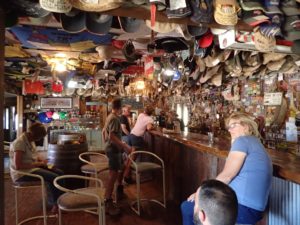
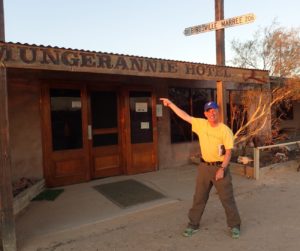
Ah, the Mungerannie Hotel! A welcome sight to travelers of all conveyances and none more so than to some thirsty, dust choked folks on bicycles. Inside its cool, dark and mostly fly free spaces you will find Phil with his time worn, well shaped, grey beard and ancient Australian cattleman’s hat. Phil has a jolly disposition, a ready smile and a twinkle in his eye that lets you know that life here need not be taken too seriously. His fridge is well stocked with cold beverages even in this no too busy season. The ceiling is decorated with numerous hats of various types but mostly of the cattleman variety. There are signs attached to many of them indicating who left them and when. The occasional bra and a few other garments round out the collection. The walls are covered with bumper stickers from all over advertising places, political expressions, sour jokes and stupid sayings. It is a unique and charming place. Phil seems to run the establishment by himself for the most part until business picks up and he does everything from fixing flat tires to pumping gas and cooking meals. In between he tends bar and looks after the campsite and guest rooms. All this done with a light and easy manner. During our stay he shanghaied some local folks to help serve our group of 19 hungry travelers at dinner time.
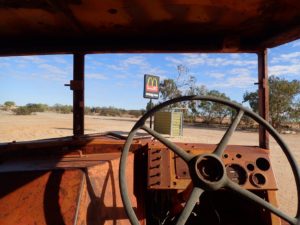
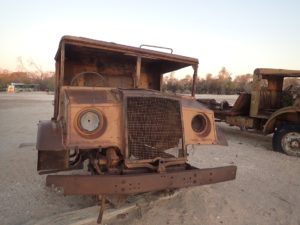
Our plan was to spend the next day here in Mungerannie with the hope that the Birdsville Track would open up for us ti travel the rest of the way to Birdsville. It is amazing that in a desert area that has had little rain over the past month that a road should be closed due to flooding but such is the nature of this part of the Outback. Two major rain events during the previous two months had loaded the up-gradient lands and that water was now slowly working its was through to Lake Eyre below Birdsville. The result was a five kilometre break in the road due to flooding. While the water was dropping it was still going to take a week or more before even the toughest four wheel drive vehicles could make it through. After exploring every possible alternative, Ralph, the tour organizer, decided we had to make a detour that involved backtracking over the roads we had travelled the past four days. Normally we would have biked another four days to Birdsville. Instead we would spend five hot and sticky days in a bus to get there.
Art in the Outback and Lake Eyre

Lake Eyre

May 11, 2019

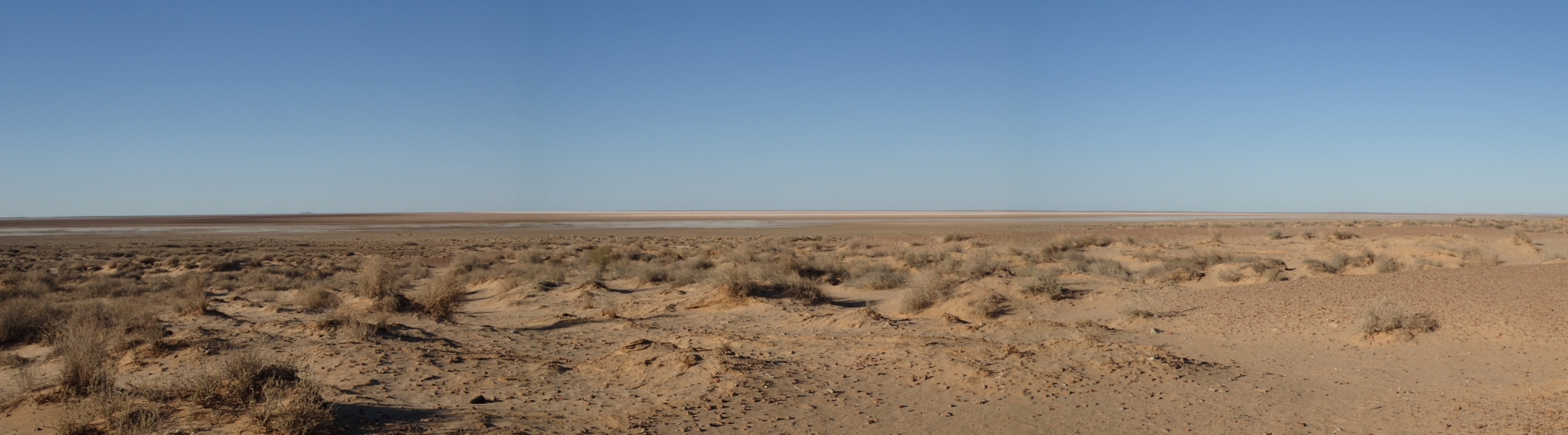
During the afternoon of our layover day in Marree some of the group loaded themselves into the bus for a trip out to Lake Eyre. Lake Eyre is a geological event that may happen only rarely in a person’s lifetime. Between the Simpson and Tirari Deserts is a below sea level salt plane that for most of the time is dry. However, when there are multiple cyclones in the northeast, floodwaters slowly flow to the southwest and create Australia’s largest lake. It is slow process with the lake taking months to fill only to slowly lose this water through evaporation and absorption over time until it is once again dry salt flats. During these rare wet intervals birds, fish and other wildlife flourish in the basin as well as wildflowers and other flora in the many water channels and flood planes that feed it. It also plays havoc with the limited system of roads in the area closing them and isolating many small settlements. More about this later.

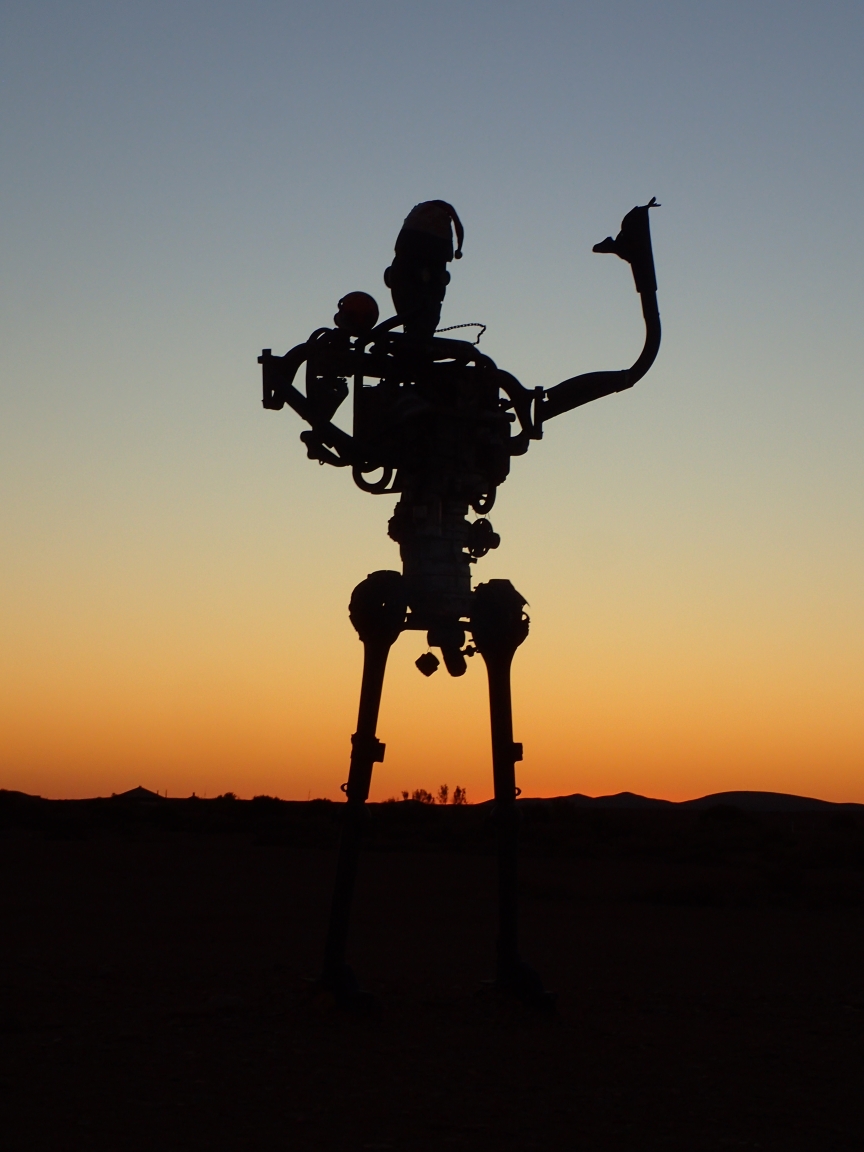
The waving man on the Oodnadatta Track

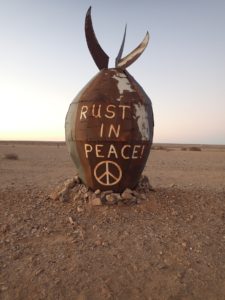
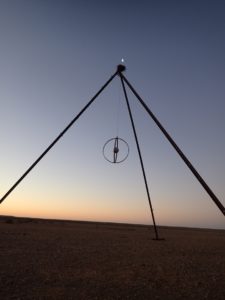
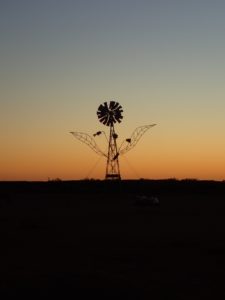
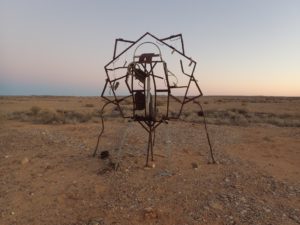
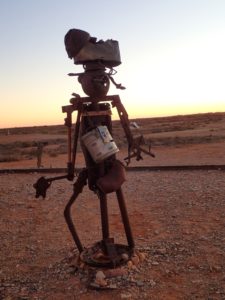
Along the way to Lake Eyre is a large open sky exhibition by a artist reported to live nearby but possibly too modest to post his or her name. These desert sculptures loom large and appear to be constructed of bits and pieces of discarded objects. We happened by just as the sun was setting, giving the works a somewhat surreal appearance.

Blessed Be the Tailwind (for it is good)

Panorama of Farina

May 10, 2019

After a day of being blasted by horizontal rain and strong headwinds this day was different. The winds were ever in our favour as we left Leigh Creek on the road to Marree. The weather was crisp but the sun was bright, the wind right and all was a delight with our world.

Ocher pits
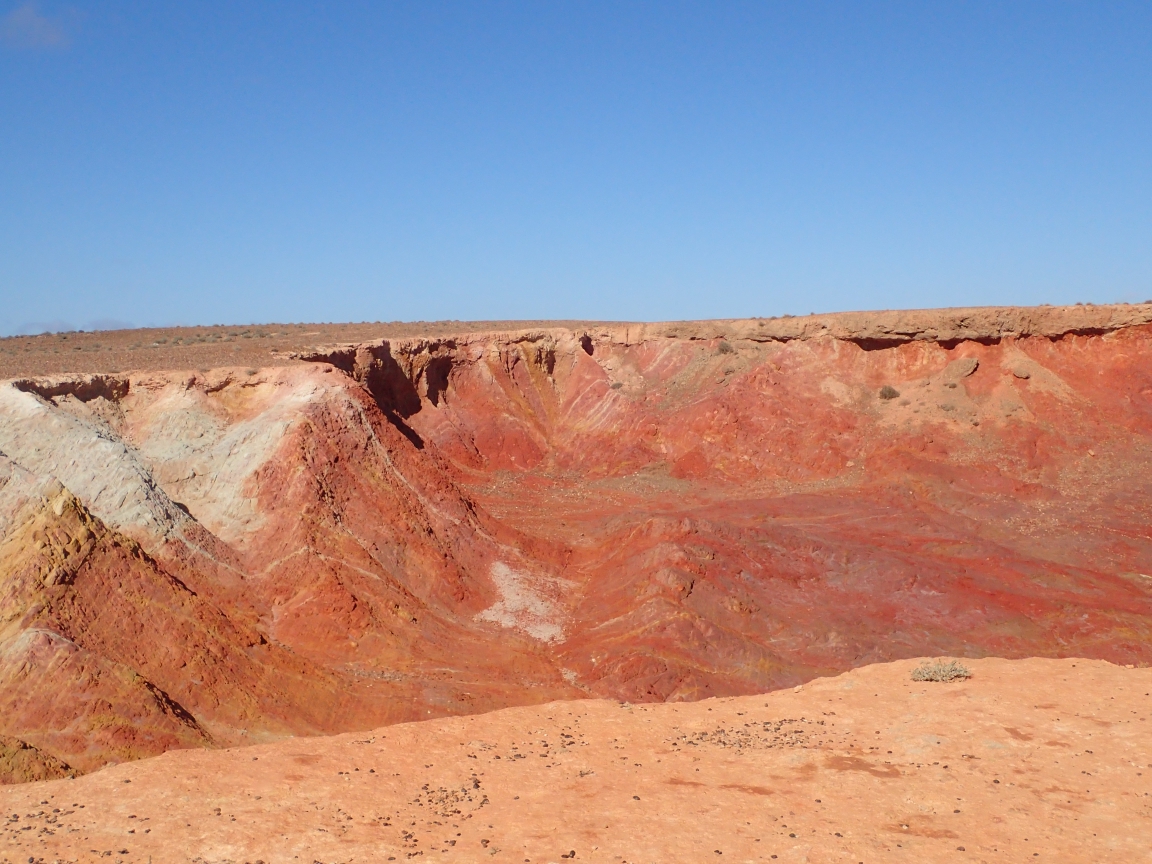
Our first stop was at aboriginal ochre pits where generations of Australia’s original inhabitants mined the red and yellow pigments. These were traded with other people over a wide portion of Australia and used for many ceremonial purposes and primarily as skin decorations.

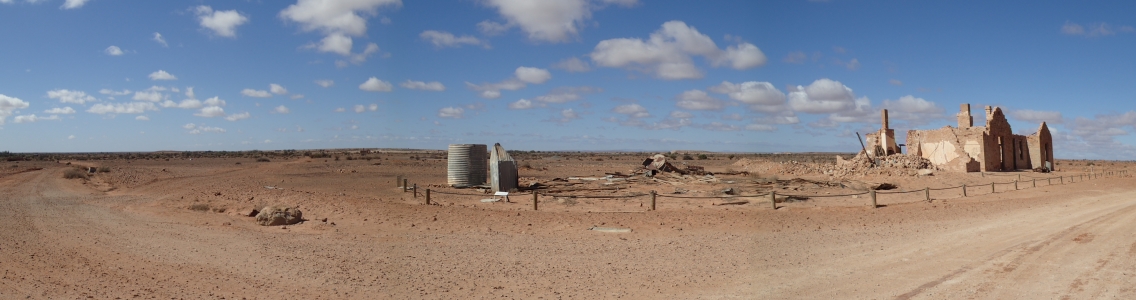
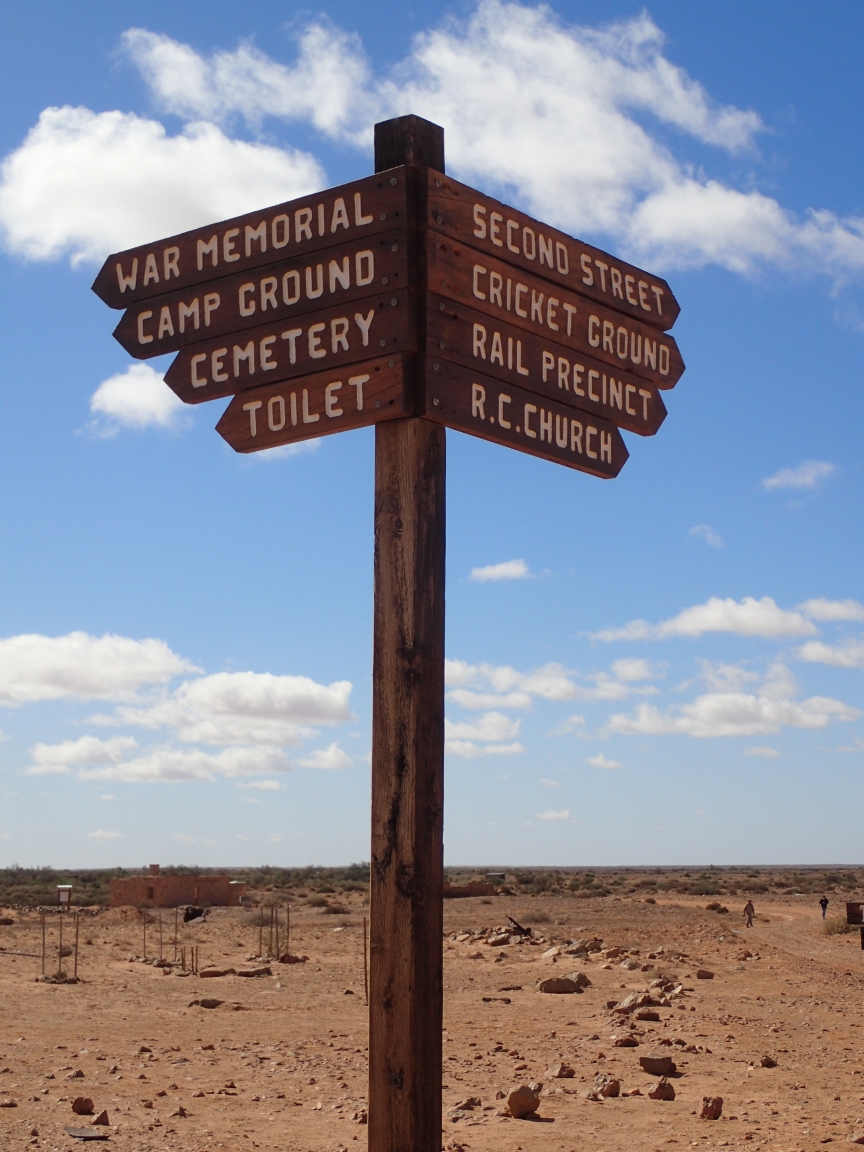
A few tens of kilometres down the road we came to the old settlement of Farina. While not much to look at today it once was an ambitious settlement. It started in 1882 as a rail-head for moving wool and livestock. At one time the cattle baron, Sidney Kidman moved 18,000 head of cattle through the town. Sheep shearers would pick up their bicycles here for the trek to outlining sheep stations. While hard to see today this was once an important transportation and economic centre on the edge of the Outback. Today it is mostly abandoned.

Signpost in Farina

Our final destination was the historic Marree Hotel in the railway town of Marree. The town serves as an oasis for those heading into the Outback via the Birdville Track. It is your last chance to load up with supplies to head into the great beyond.

Layover in Marree

May 11, 2019

The historic Marree Hotel

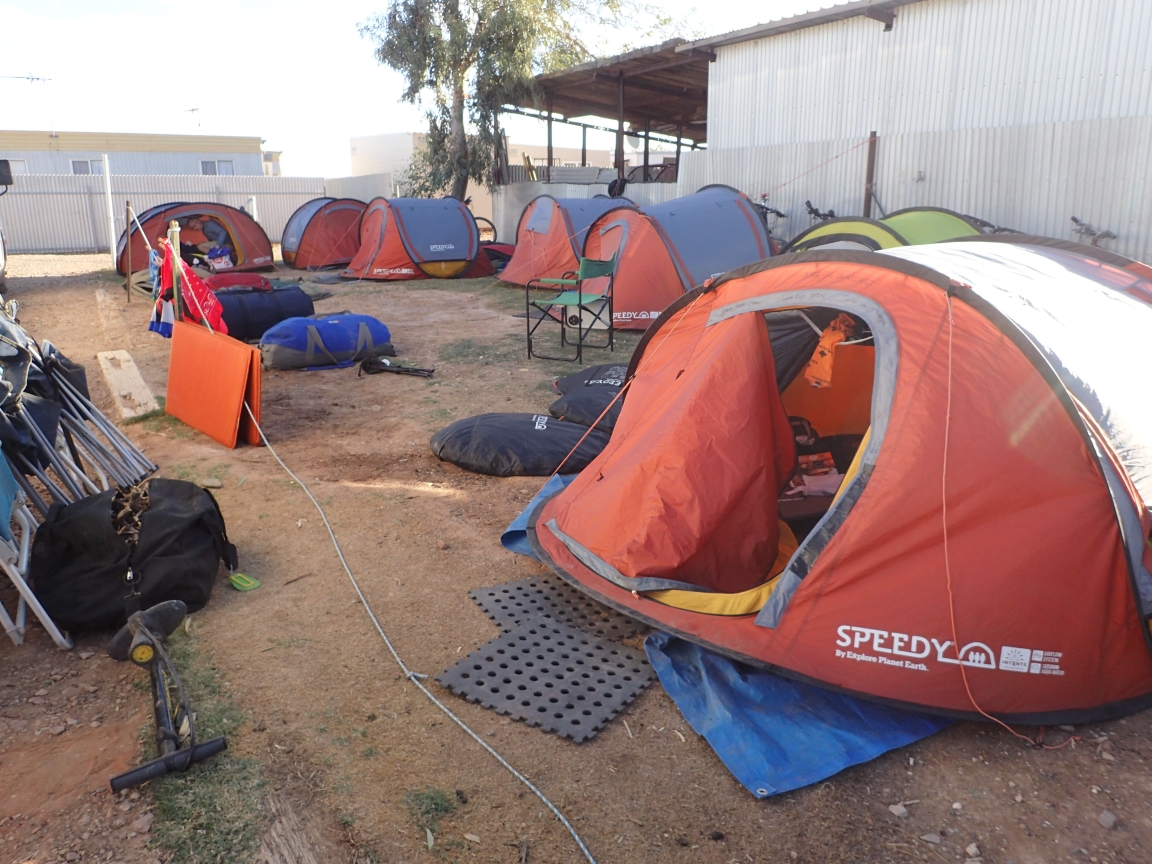
A low key day today tucked into a tiny camping area outside the Marree Hotel. No sense in laying in my sleeping bag longer than necessary so I took off to see what sights there were to see.

Deluxe, luxury camping accommodations

First was the Tom Kruse Museum at the hotel. Here I found the story of this legendary Australian who drove the Outback delivering the mail in conditions most would find impossible. His vehicle was heavily customized and modified to fit conditions for which motorized vehicles were not intended in this era before four wheel drives. A breakdown where he travelled could meant death if you did not have the resources and determination to get yourself out of a jam. His life was celebrated in the film, Outback and Beyond.

My next stop was the historic railway station now abandoned and turned into a museum. In Marree two rail lines of different gauges met requiring passengers and cargo to be moved from one line to the other or the trip south or north. Coal was also moved along the Gahn Railway until the abandonment of coal as a means of generating electricity drove the last spike into the railway’s long history.

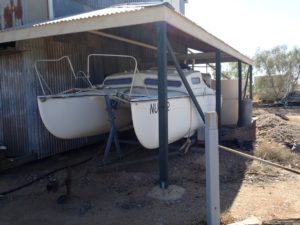
Just up the road a bit is the Marree Yacht Club which is as close to a living oxymoron as you are likely to find in this arid region. Only when the southern portion of Lake Eyre is filled is there any aquatic surface for a yacht to traverse and this is a rare event. It appears that South Lake Eyre is more famous as a salt flat where the British super car, Bluebird once tried to set a land speed record. Unfortunately this was attempted during one of the rare periods when the lake was moist.

Marree’s day as a communications and transportation hub appear to be in its past. Gone is Ghantown once home to 60 Afghan cameleers, their families and over 1500 camels. These people and their beasts were imported in the hope that the camels would be a useful means of transportation in this dry land. Today the camels have returned to their wild ways and can be seen wandering the arid acres of the Outback.

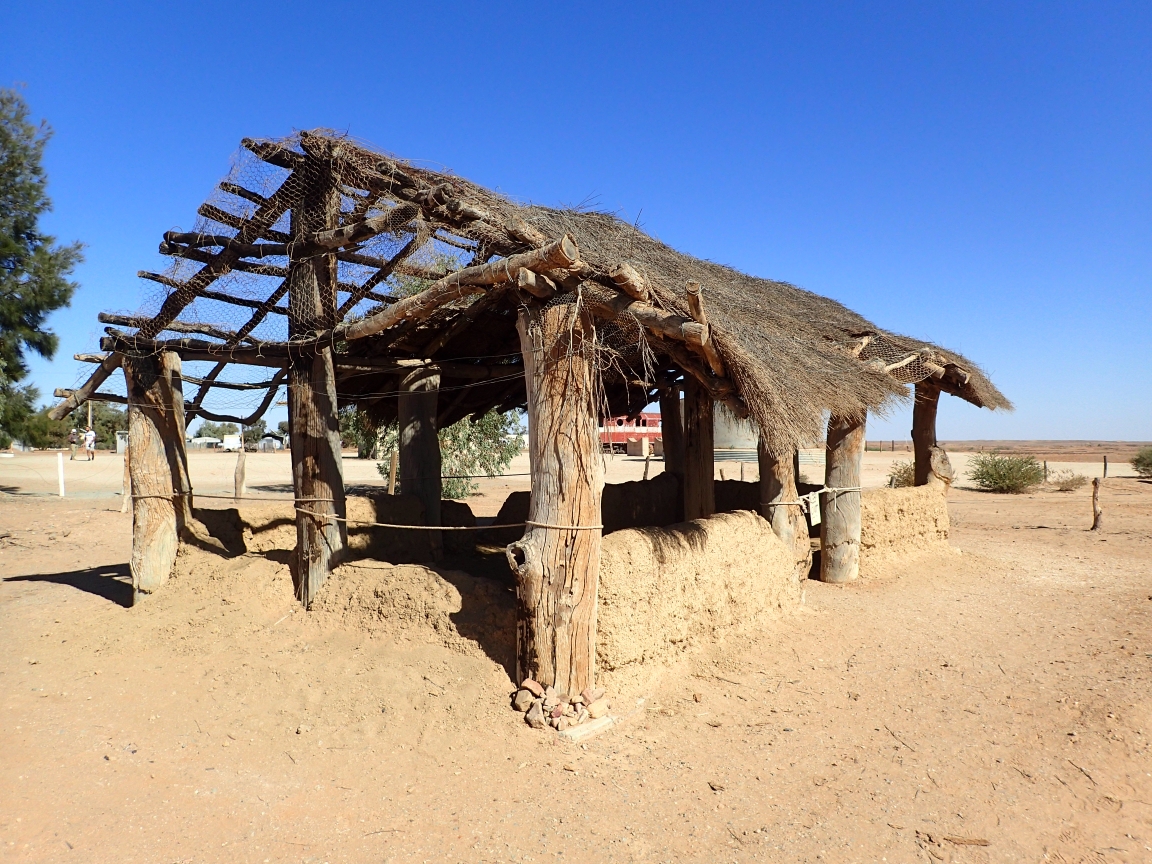
A structure from when camels trod the roads

No Longer a Kangaroo Virgin

May 6, 2019

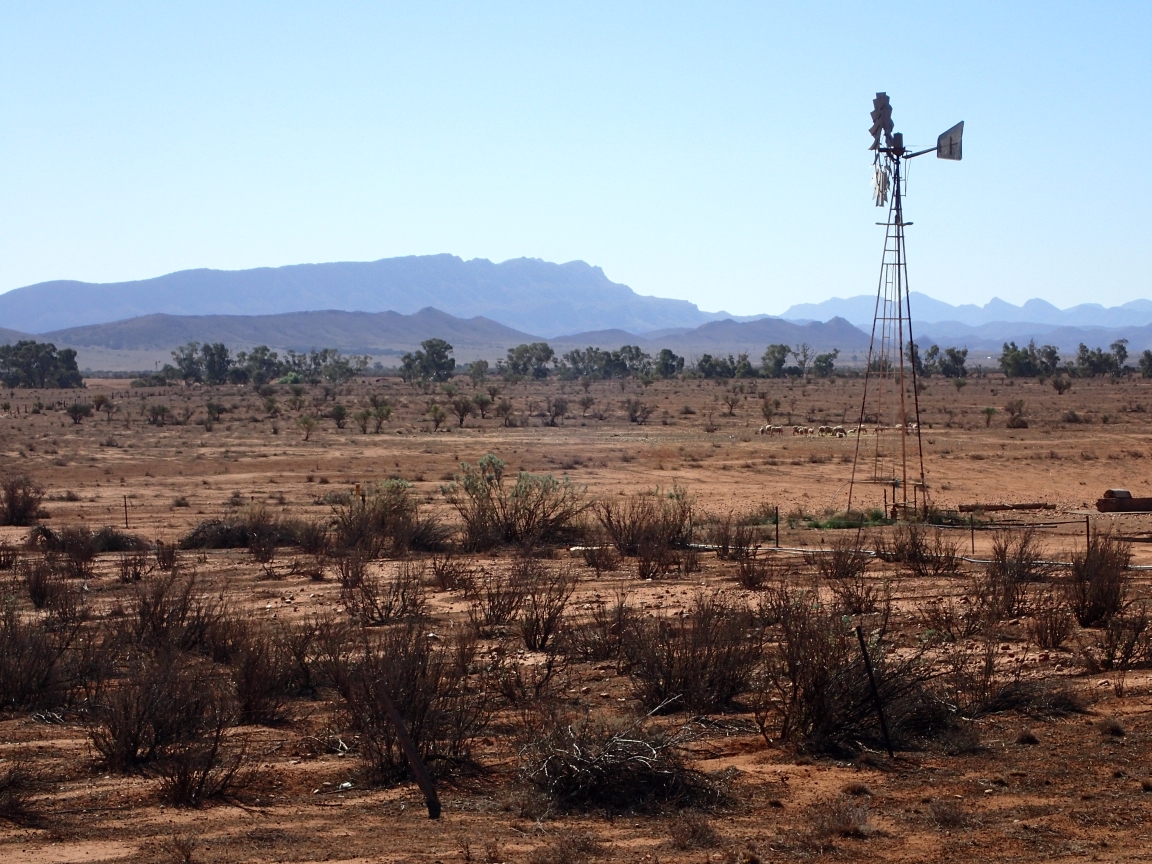
Well in a dry land

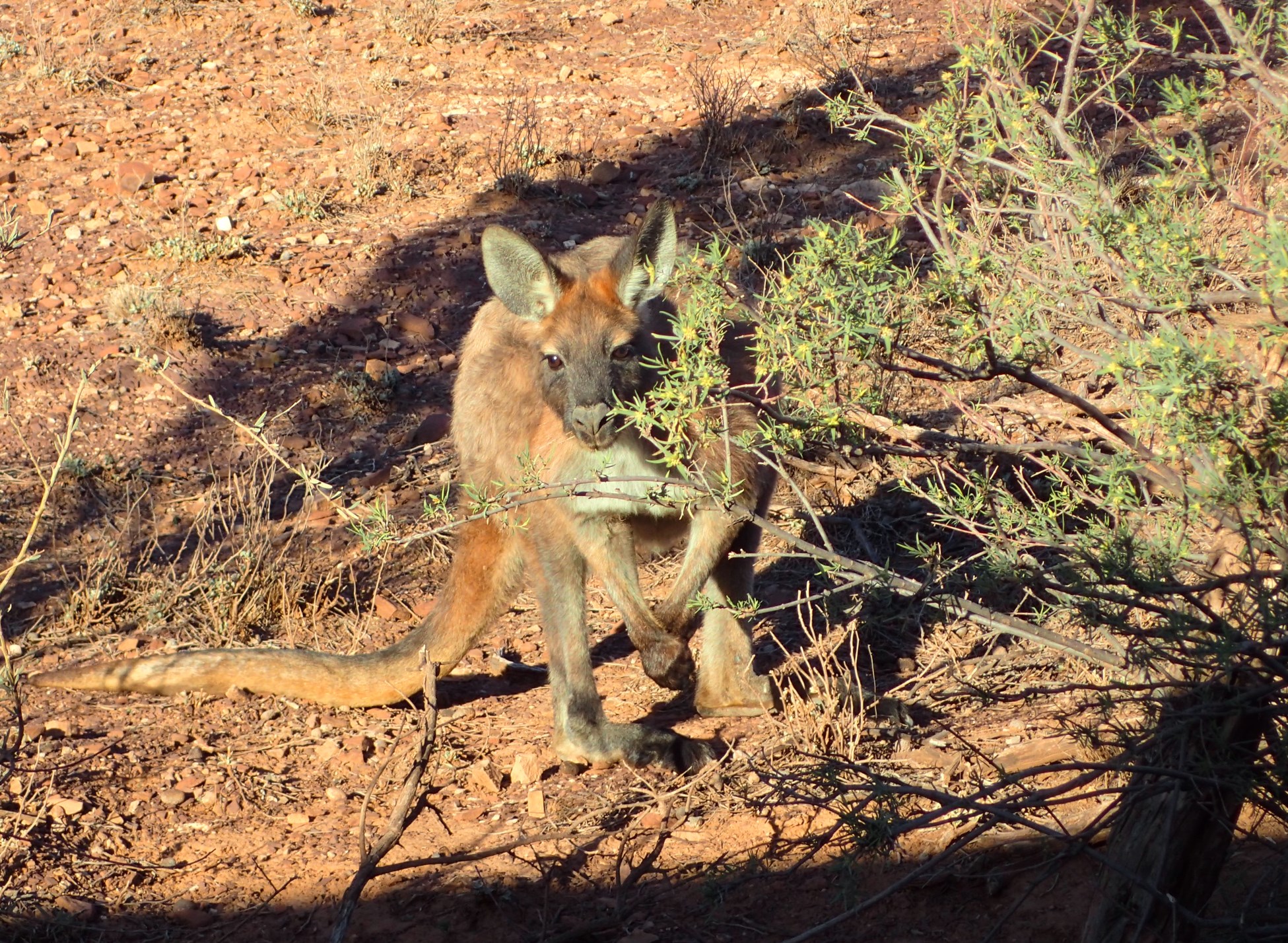
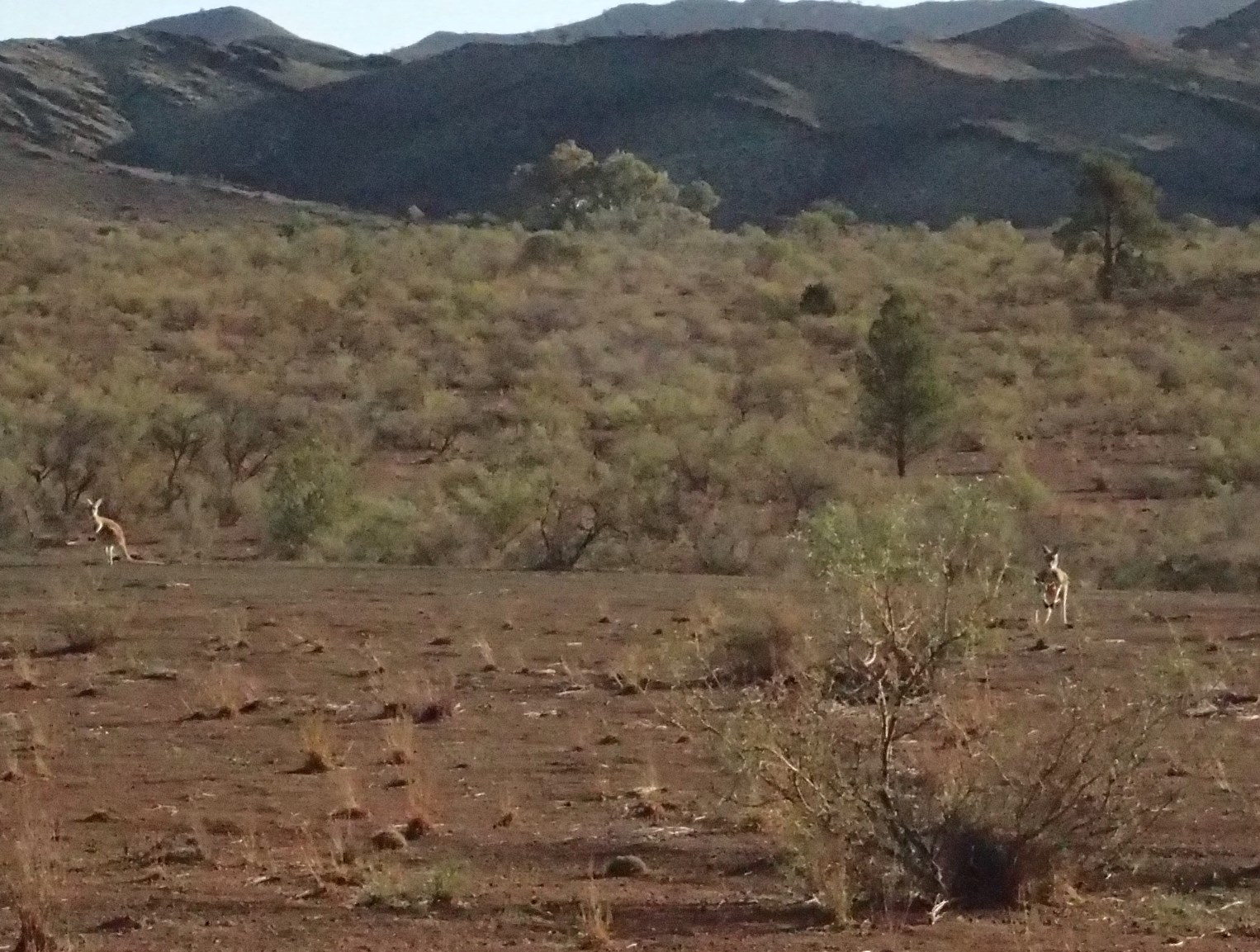
When you drive in Ontario seeing a deer along side of the road is a fairly common sight. Folks may give them a glance but no one stops to gawk. A moose trots out and it is a different story while a roadside bear tends to bring out the stupid in some folks. Here in Australia, seeing a kangaroo is in the same category as seeing a deer at home, but not for me. Sure, I’ve seen them in zoos and on television but the sight of a kangaroo in its natural environment would be a first for me. On the drive from Adelaide to Port Augusta there were none to be seen. The same was true of of my first day’s ride. Well that is not exactly true. I did see four F.O.R.D.s (found on the road dead) kangaroos but I figured road kills do not count. Today was different.

Today the big footed hoppers were everywhere: Crossing the highway, hopping through the bush lands, leaping between the pines in the forested areas, they were everywhere. Unfortunately they seem to dislike photographers. In each and every instance they manage to skip over yonder hill before I could stop and get my camera out. At one point I had a perfect opportunity. The kangaroo was busy eating whatever kangaroos eat and did not notice me brake slowly to a stop with a tree between me and him. I zipped open my bike bag and was in the process of extracting my camera when the first car zipped by causing Mr. Roo to raise his head and look in my direction. The second car sent him hopping before the camera could be turned on. Unless I wanted a parting shot of the southbound end of a northbound kangaroo heading off into the sunset, I was done. There will be others.

The ride was a long 120 km affair over varied terrain. The scenery ranged from arid desert to pine forest in the hills. There was a bit of climbing but the route was mostly rolling hills with a steady diet of dips for the frequent flood-wash zones. Good biking weather for the most part but with a gradual chill that crept in as I neared the park where we were spending the night.

Dinner was a chilly, outdoor affair and few of us lingered around. Most of us sought the warmth of our sleeping bags. There was ice cream for dessert but few takers.

The (Head) Wind Swept Hills of the Flinder’s Range

May 7, 2019

I awoke to the sound of the wind rustling the roof of my tent. It was a strong wind since it clearly woke me up despite my ear plugs still being inserted. The good news was that my tent would be dry of dew and easy to pack away cleanly. The bad news was that it was coming out of the north and north was our direction for travel this day. As they say here, “no worries.”

The long and windy road ahead

It was a truly beautiful morning. Bright sun and spectacular countryside. Unfortunately, there were strong winds with gale force gusts that require constant attention lest my bike be blown into the middle of the road or onto the shoulder. Mostly it required a head down grind, especially when it seemed to hit with greatest force just as I reached the steepest part of a climb. What should have been a highlight of the trip quickly became something to be endured.

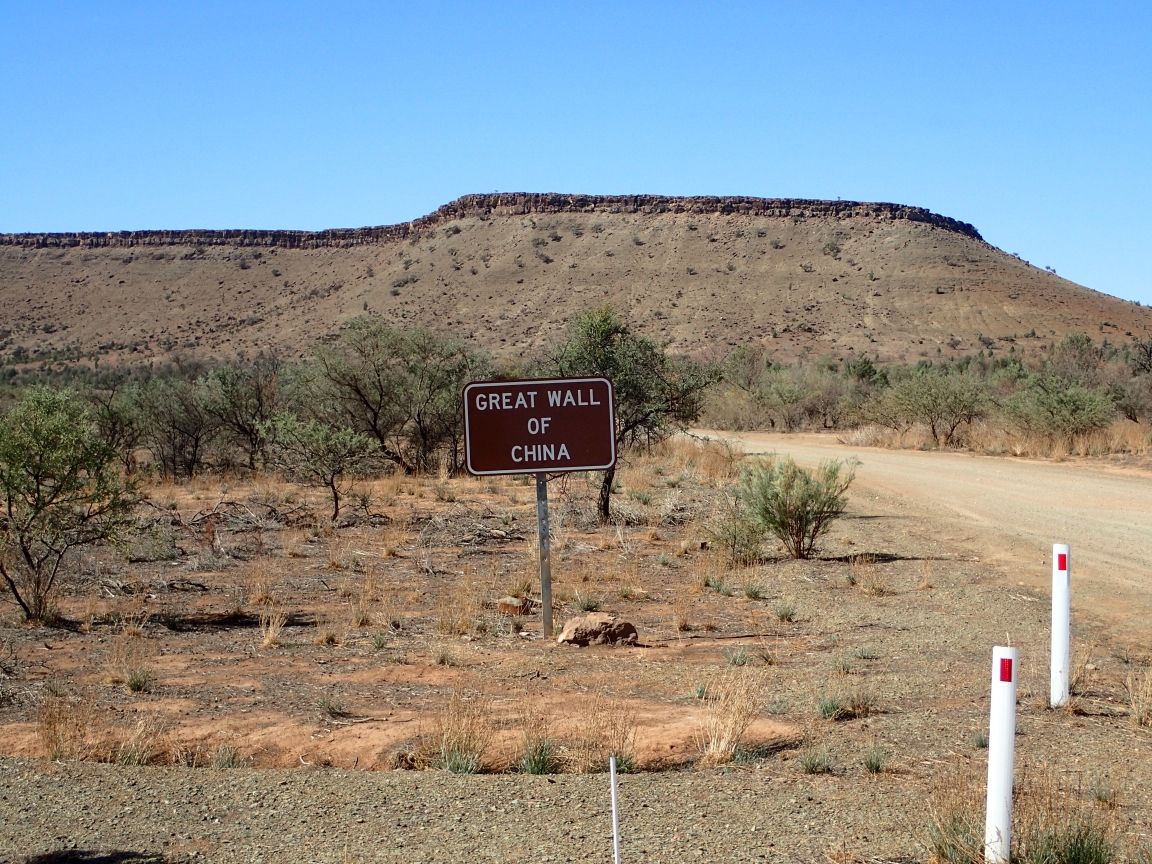
Still, I have learned to take what enjoyment is offered where I can find it and there were times when the wind eased off a bit and I could enjoy the spectacular scenery. There were wide vistas accented by sharp mountain peaks in the distance. Gradually we climbed into passes between those peaks as the road followed natural erosion patterns to take the easiest route. Along the way was a massive rock formation known as the Great Wall of China. Obviously, it is a much truncated version. The climbs became longer and steeper as the day progressed ending in Blinman, the highest settlement in South Australia where we had lunch. This was followed by a 15 km gravel grind on a heavily wash-boarded, bone breaking road to our camp at Angorichina Village where we spent the next day exploring the local sights. Dinner that night was at a pub back in Blinman. Thankfully, we travelled by bus.

Great Wall of China: Aussie Extension

Layover Day in Angorichina Village

May 8, 2019

Kangaroo close up

Today was our first rest day. A day to sort things out, clean up the bikes and give the legs a bit of rest. It started with a leisurely awakening and a nice hot breakfast followed by some time to go over my gear. Plenty of time to clean up my bike, tighten anything that rattled loose yesterday and do a bit of reading. After lunch we were on the bus for a short excursion back to Blinman and a tour of the Blinman Copper Mine.

The mine ceased operation many years ago and once employed around 1500 workers. Many of these were lured from Cornwall with promises of steady wages and permanent work. Their skill as hard rock miners was what was need for the hard rocky soil. The company paid for their passage as well as that of their extended families. Conditions were harsh, the climate colder than they were used to and the wages low. For those 1500 workers there were only 90 homes ever built. Most lived wherever they could, some carving out hovels in the banks of the dry wash. Despite the hard life the mine was relatively safe compared with other of that era with only 12 deaths due to mine accidents. Of course other illnesses related to poor diet, long days spent in a poor environment and infections claimed many more.

Tomorrow we were back on the road with another long riding day. Hard as it may be, it would be easier than any day working in the mine.

Two on the go

A Windy Day With Rain

May 9, 2019

Wind and rain swept highway

The tent roof rustled foreboding something nasty coming our way. After nearly perfect weather on our rest day it seemed as though our next riding day would test our determination. The sky was overcast and despite Ralph’s optimistic musings that the wind was nothing more than the morning breeze, I asked Mother Nature to blow her breezes from a favourable direction. Mother Nature responded that she was not taking requests at this time but to please try again later.

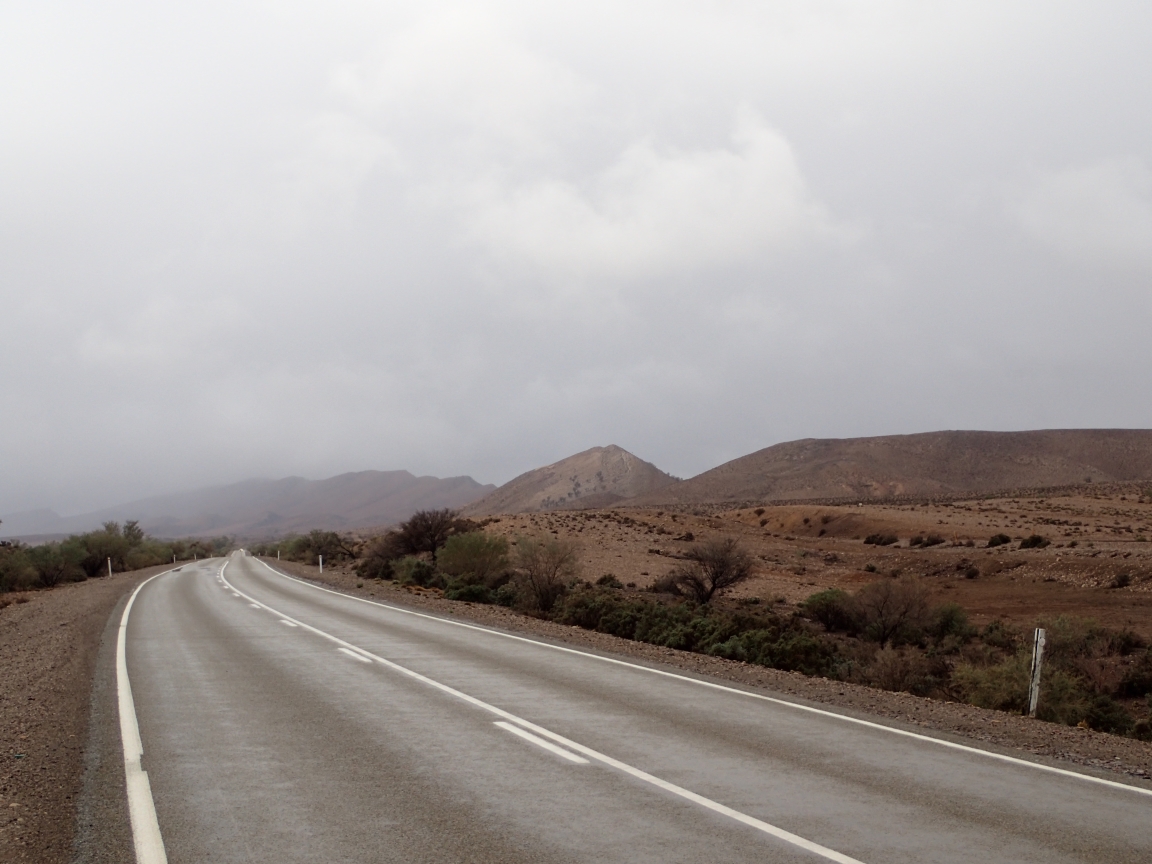
By 8:00am we were off onto 17 kms of rough dirt and gravel road with the usual wash-boarding. Thankfully it was mostly down hill. The wind was mostly in our faces but not overly strong. At Parachilna the promised hotel and bar was closed and the wind was kicking up to gale force and better. The direction was directly into our faces as we left the gravel for the black top highway. As we rode the wind increased and the rain began to fall. In the arid landscape that rain was much needed with over 29 days since rain had last fallen. I could not begrudge the landscape this needed drink. However I could have done without the horizontal rain that blasted across the highway nearly making it impossible to keep my bike upright. Fortunately, this was only for a brief period.

My Australian friends have a custom that I was very grateful for on that windswept and rainy day. It is called Morning Tea and is much like a Hobbit’s second breakfast. Our bus was parked on a side road about 30 kms into the ride with hot tea, coffee and double chocolate Tim-Tam cookies. I drank my fill and filled my fuel reserves with these offerings and headed back into the tempest.

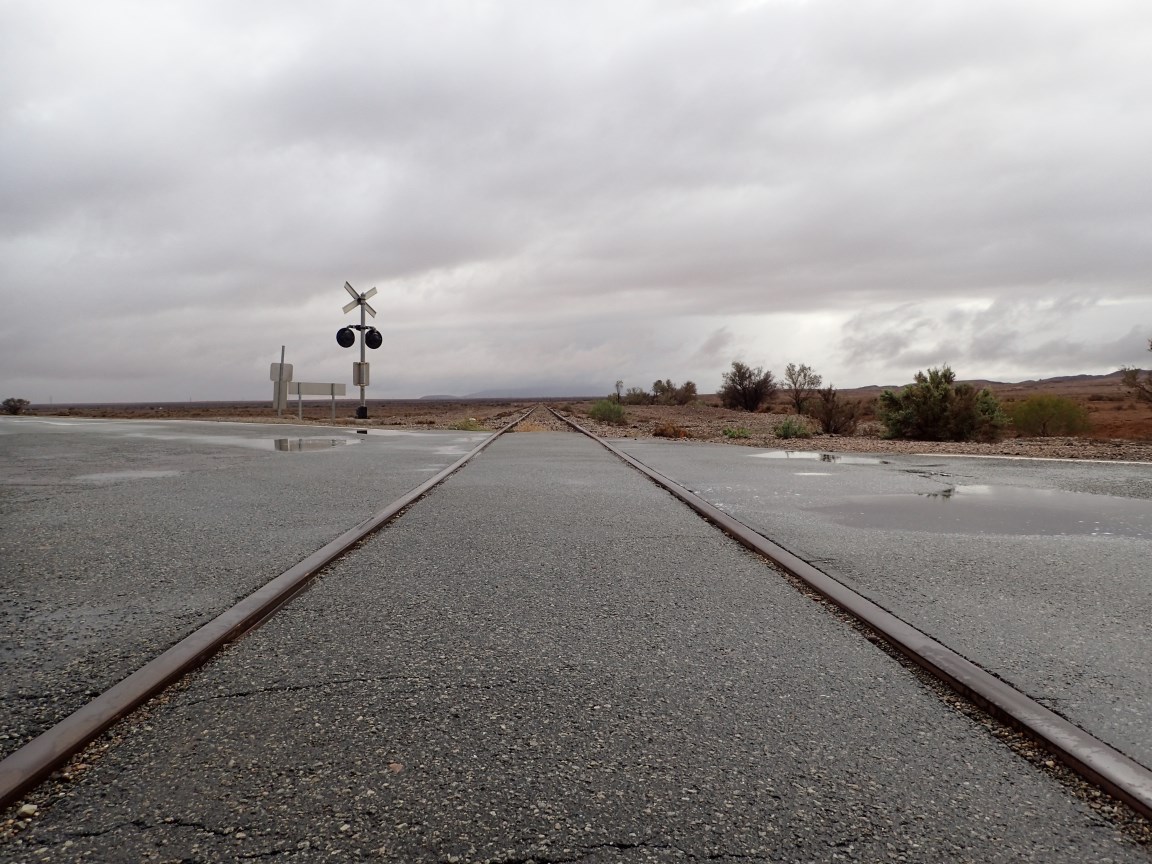
About an hour or so afterwards Mother Nature decided to accept requests and generously shifted the wind, first to slightly abaft my beam and eventually to a full on tail wind. The rain continued but now I could travel with greater ease and speed. The remaining kilometres flew by. Along the way I passed over the tracks of the Marree and Port Augusta Railway. This line once carried coal mined in Marree to the power plants in Port Augusta. With coal fired generation coming to an end so did the mines and the railway as well.

Marree to Port Augusta Railway

Our stopping point was Leigh Creek and my first stop was at the bar and grill for a hot cup of coffee. When I arrived at the caravan park the aspect of pitching my tent on the soaked and muddy dirt was not too appealing. One of my travelling companions, Paul was of the same mind and we joined up to rent a room for the night. The warm shower and plentiful heat was well worth the extra cost. Tomorrow promises to be a dry and lovely day for our ride.

Adelaide

May 3rd, 2019

Thirty one hours in transit is exhausting. My flight from Ottawa to Vancouver was full but as comfortable as flying seems to be these days which does not really speak well for most experiences. However, I had a really nice Air Canada employee at the Ottawa check in counter seat me in a totally empty row for the gruelling Vancouver to Sydney leg of my journey. I was able to stretch out and get a little bit of sleep. They also feed you well on those long overseas flights. Better still, Air Canada got all of my luggage safely to Adelaide at the same time as I did. Kudos Air Canada!

The City Market in Adelaide
The City Market in Adelaide[/caption]
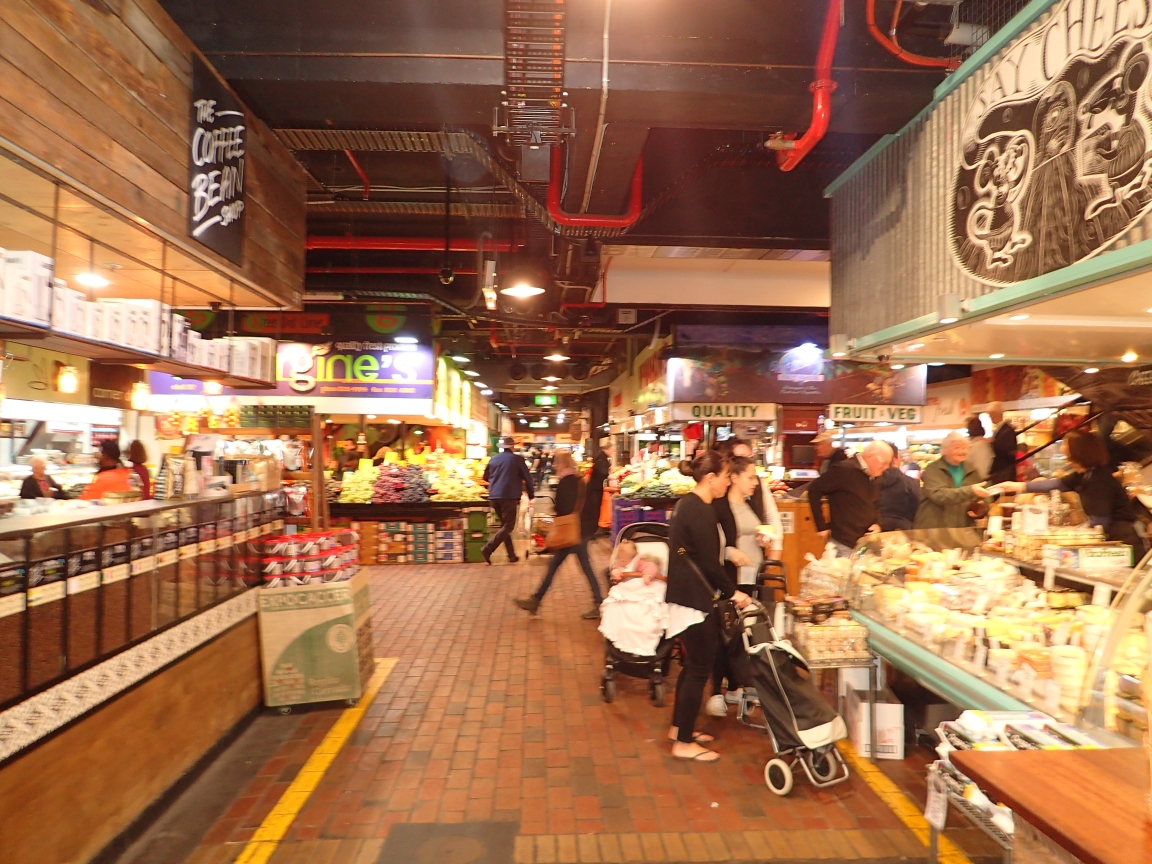
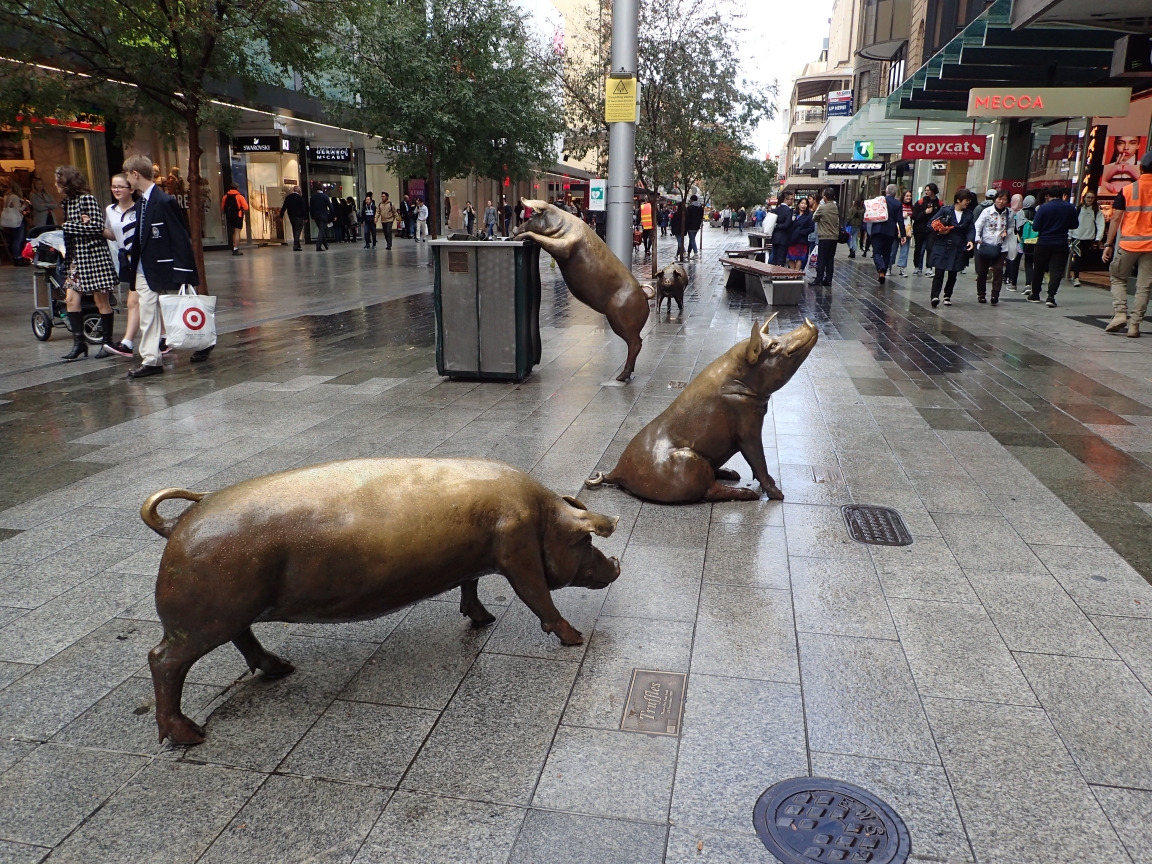
One of the thing I like to do when visiting a new city is take a ride on the public transit network to get a feel for the place. In Adelaide this is really economical and in fact, free. There are two, free bus loops that circle the city and both run buses ever 15 minutes or so in both clockwise and counter-clockwise directions. It is a nice way to see what is around and to plan your time there. I started with a nice breakfast at the City Market, a large collection of stalls each run by different independent merchants offering, food, produce, meats and other treats. It reminded me of the old Northeast Market back in Baltimore where my great-grandmother Edna used to work cutting meat in my Uncle Norman’s stall. Further north is Rundel Street where it appears Adelaide likes to shop and where the occasional strange sculpture pops up.
The pigs of Rundel Street

Fully fed I walked on to the Adelaide Botanical Gardens, a compact but carefully planned park near the edge of the downtown area. It is a world apart from the nearby city. Well planned with serpentine paths and carefully identified botanic specimens both local and exotic, it is pleasant and peaceful environment cut off from the traffic and noise that surrounds it. The gardens are home to a number of interesting birds but please do not look to me for any information about them. When it comes to birds, I know nothing.

The gardens also seem to attract school groups in abundance as well as folks who just want a place to peacefully do their thing. Among the trees and flora there are many quite spots tucked away where you can practice tia chi or MMA if you prefer.

Later I was able to meet up Paul and Jenny, two of my riding mates for the coming weeks. We enjoyed getting to know each other a bit while having a tasty dinner at at Paul’s (not the Paul on the ride) Seafood Restaurant. Tomorrow all the riders will gather, load up and head to Port Augusta where we will begin our ride. Let the journey begin!

Riding Upside DownUnder and Outbackwards

Bicycling South to North Across Australia May 4 to June 6, 2019

Introduction:

Working with the crew at Opeongo Nordic
You would think that riding across the USA four months after a major heart attack would be enough and so did I, for about six months. After a summer of regular riding and another self contained adventure down the George S. Mickelson Trail in South Dakota I was not looking forward to parking my bikes and settling in to my winter recreations of hunting and cross country skiing. Spring and summer had just been too much fun. Still, I decided to make the best of it and pitched in at the hunt camp and at Opeongo Nordic where I do my cross country skiing. By the end of November the snow was on the ground and we were in full winter mode.

Then one day a Facebook post from my friend, Chris Hinsperger appeared extolling the fun and virtues of fat biking on winter roads. Hmmm, I thought a fat bike, maybe I should just take a look. I was not going to buy one, just look at one or two and gain a bit of knowledge. I already owned three bikes and a fourth would put me into crazy cat lady territory. Next came December and the Annual General Meeting of the Ottawa Valley Cycling and Active Transportation Alliance, an organization I work with as a volunteer. Across the street from our meeting site was Martin’s Cycle and Small Engine and I needed to replace a kickstand I broke during the summer. I would just drop in and buy that one little part. But wait, they have fat bikes and what? They are on sale! Discount on all 2017 models and NO SALES TAX!!! Be still my little MasterCard. Using all my will power I walked away with just the kickstand. The next day, up jumped the Devil, kicked me in my butt, grabbed me bodily and made me drive back to Martins where I smoked the aforementioned credit card and walked out the door an official member of the fat bike community.

All the above led to a winter of fat biking and turned on the cycling adventure section of my brain. This led to checking out some tours. Europe looked exciting and interesting and having tasted the epic journey fruit, nothing less would do. The exchange rate between the Euro and my canadian dollar put the cost was somewhere in the vicinity of buying a new car and the down payment on a modest house, so that was out for the coming year unless I hit the lottery. This was unlikely since I refuse to pay that stupidity tax. Then one day while browsing the grassy fields of the Internet I came across the Outbike website and their Gulf to Gulf across Australia adventure. With the Australian dollar and the Canadian dollar nearly at par, this trip was affordable. I needed to know more. Some web searching and review reading confirmed this was a good outfit, the ride looked fantastic and the trip was definitely going forward. I put my hard earned dollars on the table and made the decision to go. Let the training begin!

Training in Winter’s Grip

February 2019

The good news is that through the use of a fat bike and some studded tires on my Kona mountain bike, I was able to ride outdoors in some tough winter conditions. I still needed my reconditioned, 1980s vintage Miele as an indoor trainer on occasions but no where near as much as I did getting ready for the Southern Tier last year. It still took some diligence to get out there for two or three hours on those sub zero days but on the plus side, my setter, Blaze was able to enjoy some run along trips when I took the fat bike on the bike and snowmobile trails.

April Snow Showers Bring Longer Rides

April 5, 2019

My wife and I were away in March retracing some of the Southern Tier route I rode in 2018 so I was able to get in some nice rides including one that involved wading in waist deep flood waters in Florida. This kept my legs in shape for my final push to longer rides this month. I was coming down to the final weeks before heading down under and everything was on track for another epic ride. My health was great and my physical condition a big improvement over where I was before The Ride of the Nearly Departed. I just needed to bump up the mileage a bit and physically, I was good to go!

GO Day

April 30, 2019

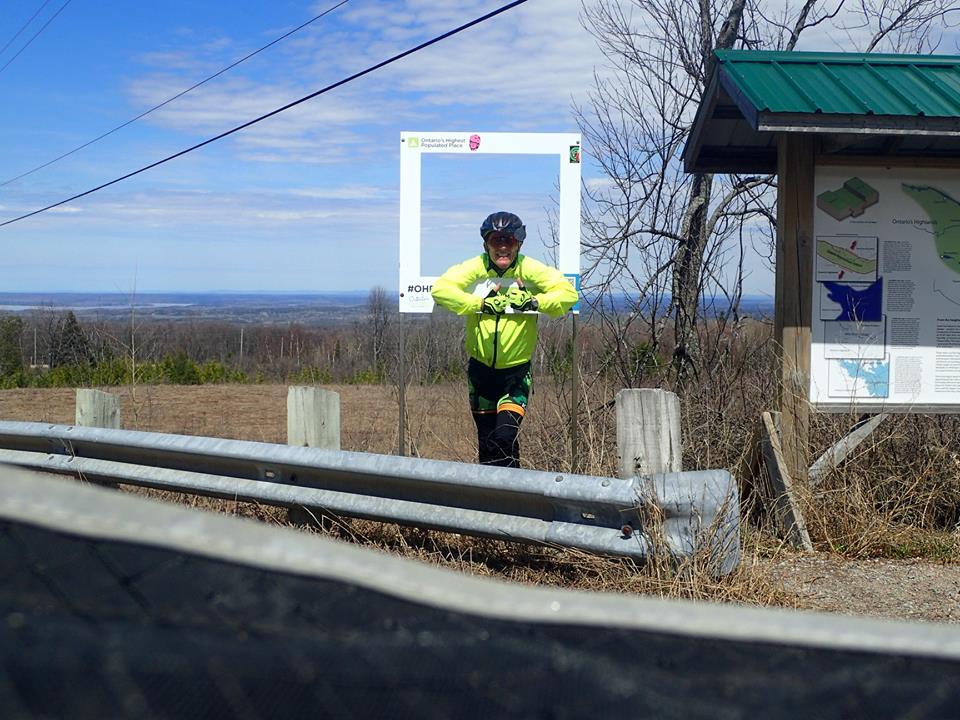
My last ride up the Foymount climb before leaving.
Today was GO Day. The bags were packed, plans in place and I was off to Ottawa for the first leg of the long trip to Australia. The last month saw winter hang on with a vengeance. Most rides were with a cold wind in my face and occasionally with snow sticking to my glasses. No worries though. While they were unpleasant at times, they helped toughen me up for whatever Australia had to throw at me. Mostly it was good to be outside watching the winter slowly melt away as the miles rolled by. The next two days were be spent in the luxury of Air Canada’s lap and a tour of some fine airports. At least the overseas leg of the journey promised a sparsely populated plane and maybe some room to stretch out and see what the insides of my eye lids looked like. I closed this day with a silent prayer that my luggage and I arrive together at the same time and airport. Amen.

Ride Around Sault

July 31, 2018

Day -2

This trip began with a Senior Moment. I intended to take two days to make the journey from home to the Black Hills of South Dakota with plans to start on the George S. Mickelson Trail the day after I arrived. Everything was set to coincide with the travel plans of my friend Dennis who was attending the big motorcycle rally at nearby Sturgis. Since I was riding the trail by myself I wanted the extra safety of having someone I knew nearby to lend a hand should I need one. Dennis wouldn’t be riding his Harley all the time and he already had a place to stay where I could mooch a few nights when required. For some reason known only to my aged brain, I thought I was starting as planned on Tuesday, August 1st which would have been perfect except for the fact that it was actually Tuesday, July 31st. It only took 150 kilometers of driving for this fact to make its way through the fog bank I use for a brain. In a bazaar turn of fate, Dennis made exactly the same mistake and started a day early as well. It appears that dull minds malfunction alike.

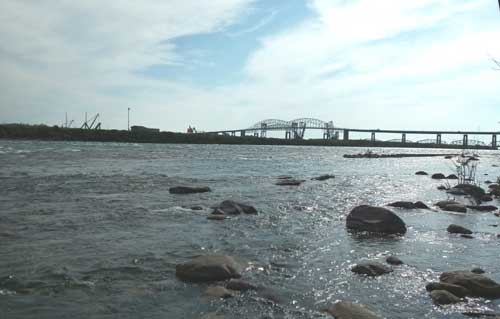
The St. Mary’s River

Rather than turn back and wait a day I decided to put the extra time to good use. I now had 24 more hours to make the drive to the trail head and time to see some sights along the way. My first stop was the city of Sault Ste. Marie, Ontario. The Soo, as most folks call it, is a blue collar town built on ships and steel. Sited on a isthmus of land between Lake Superior and Lake Huron it was naturally positioned to become a transportation hub. However, it is more than its steel, rail and canal locked past. Sitting at the door of Ontario’s far north and blessed with access to boundless hunting, fishing and recreational opportunities it is as much a playground as it is lunchbox and punch-clock. Arriving in the early afternoon, I slipped my bike off its rack and took a tour of the city’s newly reclaimed waterfront.

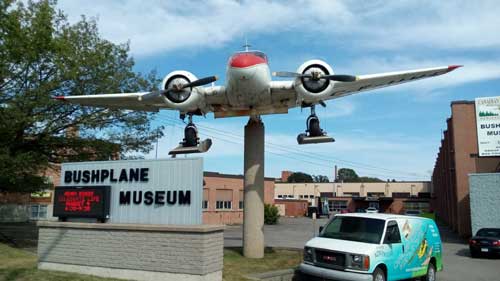
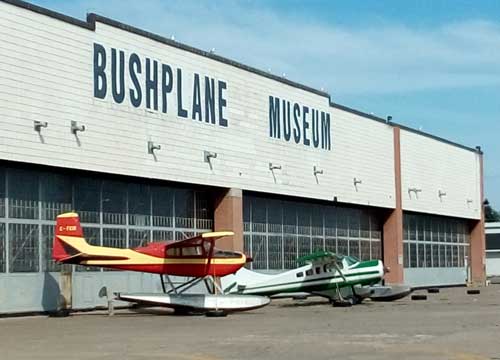
The Bushplane Museum and part of Canada’s heritage

Too many exhibits to keep indoors

Locking through the canal

Along the banks of the St. Mary’s River there is a network of mostly connected walking and bicycle paths that allow you to safely ride or walk while enjoying views of the river ripping its way between two nations. Along the way are a number of docks and boardwalks where you can take in the breeze on a summer afternoon or wet a line with hopes of catching dinner. On your way to St. Mary’s Island and Whitefish Island with their recreational trails, you can pass by the Float Plane Museum where lovingly restored and preserved aircraft tell the story of a land where lakes were the only runways. Paths take you across the working locks of the St. Mary’s Canal to the gravel paths of Whitefish Island and views of the rapids on the St. Mary’s River and a wild environment little more than an arrows flight from the working city. I watched anglers making their casts while nearby kids rode their bicycles and elderly couples walked hand in hand. A tour boat, loaded with camera clickers locked through the old canal on its way down river. It was a peaceful and relaxing spot despite being relatively busy. A pleasant way to pass an afternoon before passing on to Austin, Minnesota the next day.

Getting Around in Austin with a Side of Sparta

August 1, 2018

Day -1

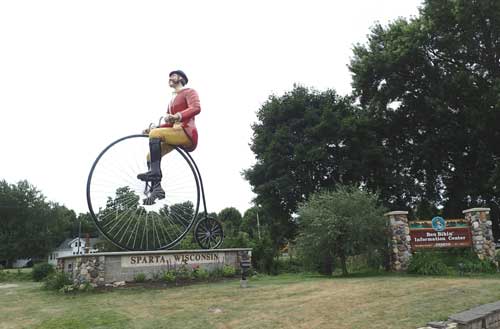
Big guy on a big bike

One night’s sleep and 10 hours of construction delayed driving took me from Ontario, through Michigan’s Upper Peninsula and Wisconsin to my second night stop over in Austin, Minnesota. Along the way I saw a sign that drew me in off the Interstate to Sparta, Wisconsin the self proclaimed Bicycle Capital of America. I had to know why this was so and I figured that since I needed a new bicycle pump, this would be a place sure to have a good selection. A trip down Main Street and through the entire business district yielded no bike shops so I decided to stop into the local Museum. Curiosity was driving me to learn just what makes this town claim such an august title. A large Penny-farthing bicycle was rooted just outside so I entered confident that this was the place to find my answers. I expected to be hit in the face with all sorts of bicycle related history when I walked through the front door but no, there was not so much as a tricycle in sight. I wandered around and took in exhibits about the town’s proud history and its heroic war veterans but nothing obvious about bicycles. Not ready to give up, I asked a staff person where I might find some support for the town’s marquee claim. She led me to a twenty four by eighteen inch panel at the bottom corner of a display explaining that Sparta was supposedly the first town in the USA to convert a railroad bed into a bicycle path back in 1962. It was an impressive move for that early a year and they certainly were well ahead of the curve on conserving these wonderful routes for public uses. Still, I think you might need a few more bells and whistles to truly make such a broad scale boast. I also expected the local museum to make a bigger deal out of the topic.

What I did not know was that the Deke Slayton Memorial Space and Bike Museum was also housed in the same building on the second floor. There was nothing obvious to indicate this at the front door but given my track record for matching the date with the day of the week I am tempted to put the blame on my powers of observation. Still, given the question I asked of the museum staff, I might have hoped that she would have pointed me up the stairs to where the answer to my question and much, much more awaited.

Cheers for Sparta anyway! However, they really need to let museum staff and the folks at the visitor’s center know where the town’s only bicycle shop is located and maybe put it on the town’s map which is on display a stone’s throw from their giant statue of a Gay 90’s guy on a Gay 90’s bicycle!

Austin, Minnesota is definitely a bicycle friendly town. Miles and miles of human power only paths take you just about anywhere you could want to go. It is home to the world headquarters of the Hormel Corporation, processor of meat in all its glorious forms from raw to Spam in a can. While you might have expected such an operation to have been located closer to the source of pork and beef, you would be overlooking an important fact. In the early days of meat processing the ability to keep it cool or frozen was important to the processing process. Minnesota has plenty of cold and Hormel took advantage of that fact coupled with its excellent rail connections and middle of America geography.

With Hormel providing a strong economic base, Austin has maintained a lot of Main Street curb appeal. Local stores flourish along with many parks and recreational opportunities. Everything looks clean, neat and well maintained and walking or riding through the business district is a pleasure. There is even an entire museum devoted to Spam! Monty Python, eat your heart out.

So long as meat is on the American table and Hormel is willing to and use Austin to put it there, this town will do well. Local residents can surely get their cardiovascular money’s worth if they make full use of this city’s network of safe and smooth bike paths.

Pre-Ride Duties ~ Keystone, SD

August 2, 2018

Day 0

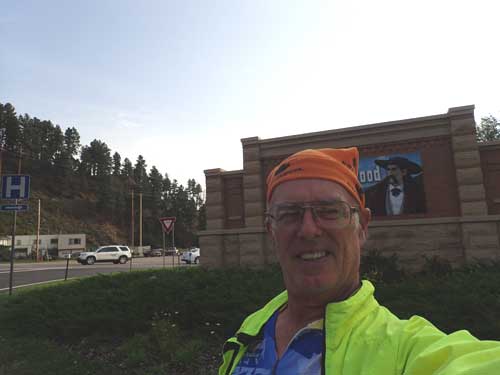
My plan was to stop by Deadwood and pick up my trail pass from the nice folks at their Visitor’s Center. I arrived a little after 1pm and the town was already in full on Sturgis motorcycle mode despite the rally not starting in nearby Sturgis until the next day. Streets were beginning to be blocked off to make way for the flood of Harleys and other bikes that were already gathering. Deadwood is just a short roar of the tailpipes from Sturgis and acts as a surrogate host city for the rally. Having wall to wall casinos and saloons makes it a draw for the biker bunch even without it being the place where Wild Bill Hickok ate a lead sandwich. More about this later. While completely out of place with my pedal powered mountain bike, the folks at the visitor’s center were eager and helpful in getting my pass and supplying me with a map and other information about the George S. Mickelson Trail. The price was a bargain at $4 a day and $15 for a year.

Another hour’s drive through the Black Hills brought me to Keystone where my pal Dennis had a motel room that I was going to share. Finding a motel anywhere within a hundred miles of Sturgis is a neat trick any time during their big rally so I was happy that Dennis had a spare bed for me to crash on. I arrived a bit before check in and was deciding how to spend the next hour or so while waiting for the room when the desk manager asked if I had jumper cables. “Sure,” I replied and asked who needed a boost. He said that some guy had a dead battery on his bike and was unable to roll start it on the nearby hill. He was now stuck at the next motel down at the bottom waiting for a tow truck that would likely not be coming anytime soon. He said just look for a guy standing around with a forlorn look about him and blue Harley. Back into my Honda and down the hill I went.

I saw the motel and the blue Harley right away and looked around for Mr. Forlorn. Sitting in the shade nearby was some older dude who was talking on his cell phone. I did not recognize him until just as I started to lower my window. “Hey Dennis got a problem?” I asked. He looked up, not recognizing me for a second or so, and after a quick, “hey Bobby” launched into a dejected diatribe about motorcycles, the American Automobile Association, himself and other unsavory topics. It seems that his new Harley had this security feature that flashes the lights when the key is not in the ignition and if the bike is shaken or moved. It had been doing this for the past two days and 1500 miles, draining his battery at the same time. AAA would not jump start him and would only tow him to a service shop if and when they could get there. The Harley dealership in Sturgis was swamped in service calls and would also take quite a bit of time to arrive. No problem, my trusty, although rusty jumper cables were at hand and after getting his seat removed with the help of borrowed screwdriver, we were hooked up and ready for…nothing.
His battery was truly dead; as dead as a battery could be and my Honda and not too trusty cables were not up to the task. After 10 or so tries we admitted defeat and headed off to the nearest place to buy both some decent jumper cables and a battery charger. One and a half hours and number of dollars later were were back and ready to try again. This time we allowed his battery to charge off my Honda’s generator for about 30 minutes before giving his starter try and lo, like magic, his engine fired to life with that distinctive throaty roar know to all Harley owners. Time for dinner and an adult beverage or three.

Deadwood to Hill City

August 3, 2018

Day 1

Starting in Deadwood

I arrived at the trailhead in Deadwood as early as I could get there hoping to get a parking spot nearby. The large lot was already fairly fill with the vehicles and trailers used to haul the hundreds of motorcycles already in town. Luckily my Honda Fit is small and can be tucked into even the most unlikely of parking spaces. A few minutes to unload the bike, attach my panniers, take a look at my map and I was off for the first 60 or so miles of my ride.

Many views like this

The trail out of Deadwood is smooth packed stone dust as is most of the George S. Mickelson Trail. It mostly follows the old rail bed of the Chicago, Burlington and Quincy Railroad from Edgemont in the south, northwards through the Black Hills to Deadwood. As it leaves Deadwood and starts on its long uphill grade into the Black Hills, you can still see the old rails peeking through the stone dust for the first few miles. Over the next fifteen miles you climb steadily up a two to four percent grade while climbing just over 2000 feet. I found it to be the most strenuous part of the ride due to the steady pace needed throughout the climb. What it lacks in steepness it makes up for in distance but is still well within the abilities of most people in decent physical condition on bikes with climbing gear ratios. The compensation is some fantastic scenery along the way.

This first leg of my ride was by far the most scenic and interesting. The Black Hills are spectacular with vistas and interesting sites along every mile. The trail is well maintained and serviced by shelters, water pumps and historical information plaques at regular intervals. Old mines poke up along stream banks and ghost towns appear as you round a bend. Most of the land is private and cows sometimes graze along the trail in the high pastures. There are gates in these areas and although they are self closing, they sometimes need a bit of help. This section passes by the old Bulldog ranch which served as a stagecoach stop, bootlegger’s depot and “entertainment center” of the adult variety. Stop and read every sign, it is well worth the time it takes.

Just around milepost 90 my journey took a positive turn with the beginning of a nice nineteen mile long downhill grade to the Durmont Trailhead. The scenery became more open pasture and occasionally ran alongside the roaring thunder of Highway 17 with it groups of touring motorcycles. It was still a mostly quiet and peaceful journey with far less effort per mile traveled.

Between Rochford and Mystic I passed through four tunnels blasted through hill tops as the old railroad route moved back into hill country. There was bit of up and down riding in this section with the up side winning overall. The ghost town of Mystic appeared as I rounded a stream side bend and it was time for lunch break and a refill of my water bottles. After a few hundred calories it was back into the saddle and upwards for another five hundred feet of so before the last downhill glide into Hill City and a stop to pick up something for dinner. Another 11 miles along the twisting Old Hill City Road took me to Keystone, my friend Dennis, a hot meal and good night’s sleep. Thankfully, the Old Hill City Road is mostly downhill to Keystone!