Otobe to Pirika
June 16, 2023
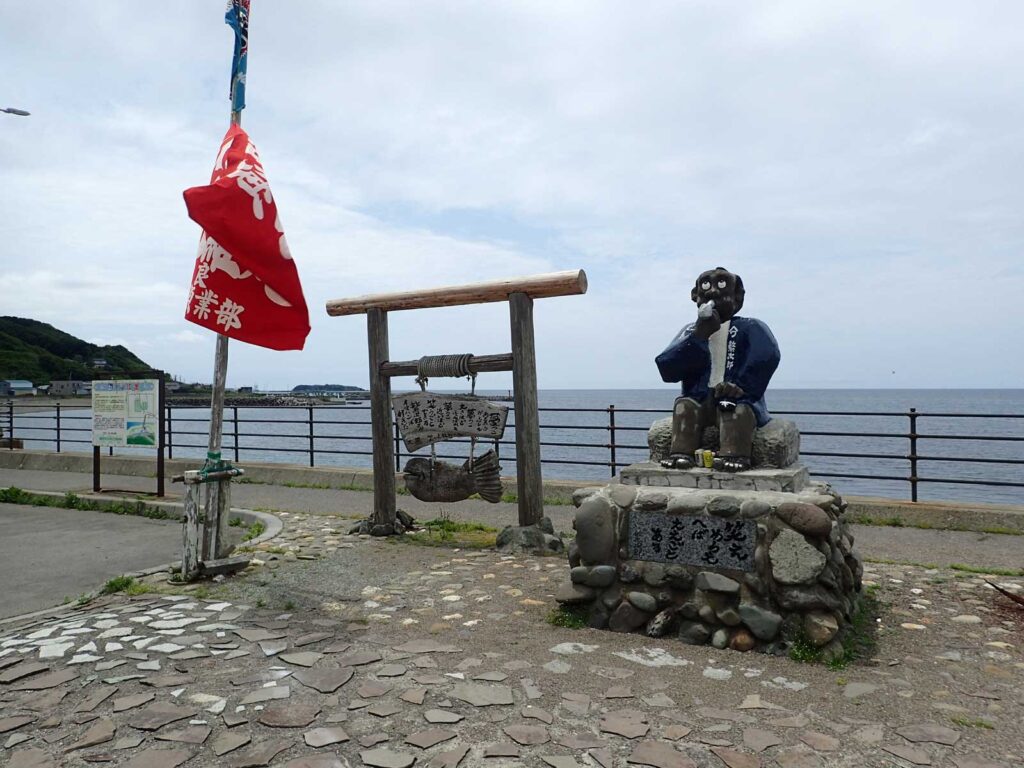
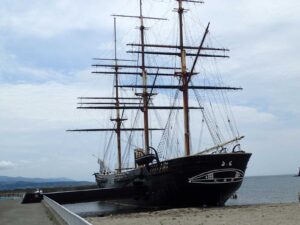
For the past day and a half we have been riding along the east and west coast of Hokkaido. Our route began yesterday with a dark and misty ride along the island’s Pacific coast and through a few easy hills and tunnels over to the west coast on the Sea of Japan. Almost as soon as we emerged from the long tunnel that cut through the range separating the two sides of the island the mists lifted and the sky brightened into an almost sunny and definitely warmer day. From there it was downhill all the way to the western coast and some of the flattest riding of the trip. We rode through fishing villages dotted with small marinas and smelling the salted seaweed scented air that seems to be nearly the same in coastal communities around the world. I paused at one marina to take some pictures of a tall ship that seems to be from that transition era when both steam and sails worked side by side on metal hauled craft.
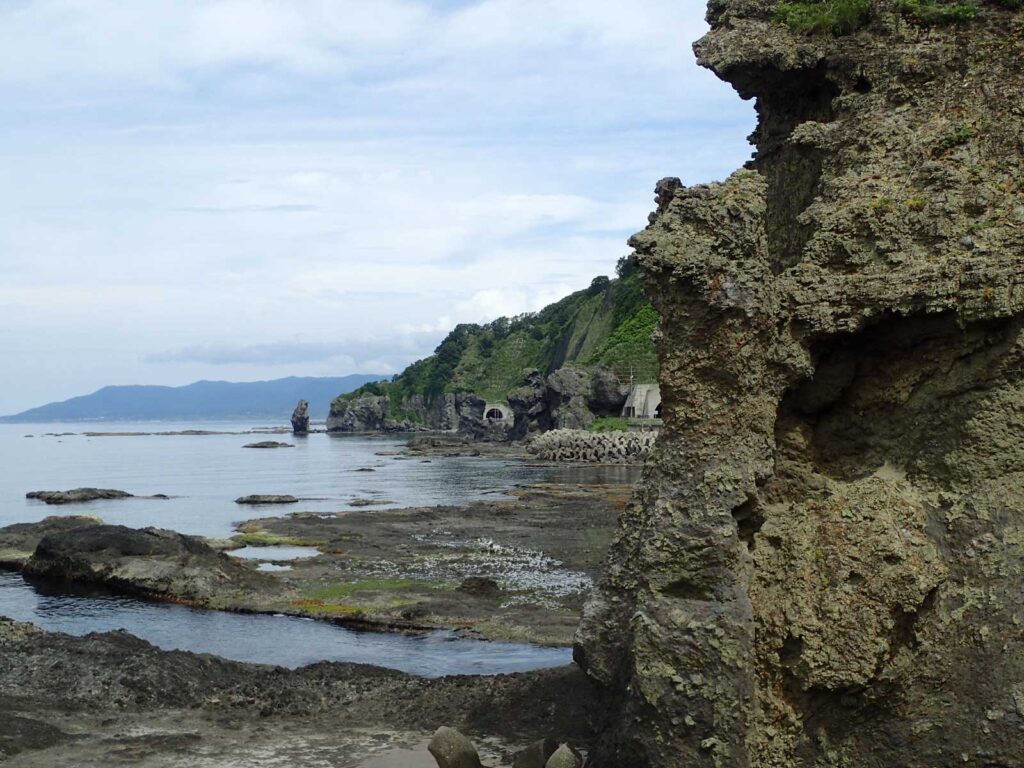
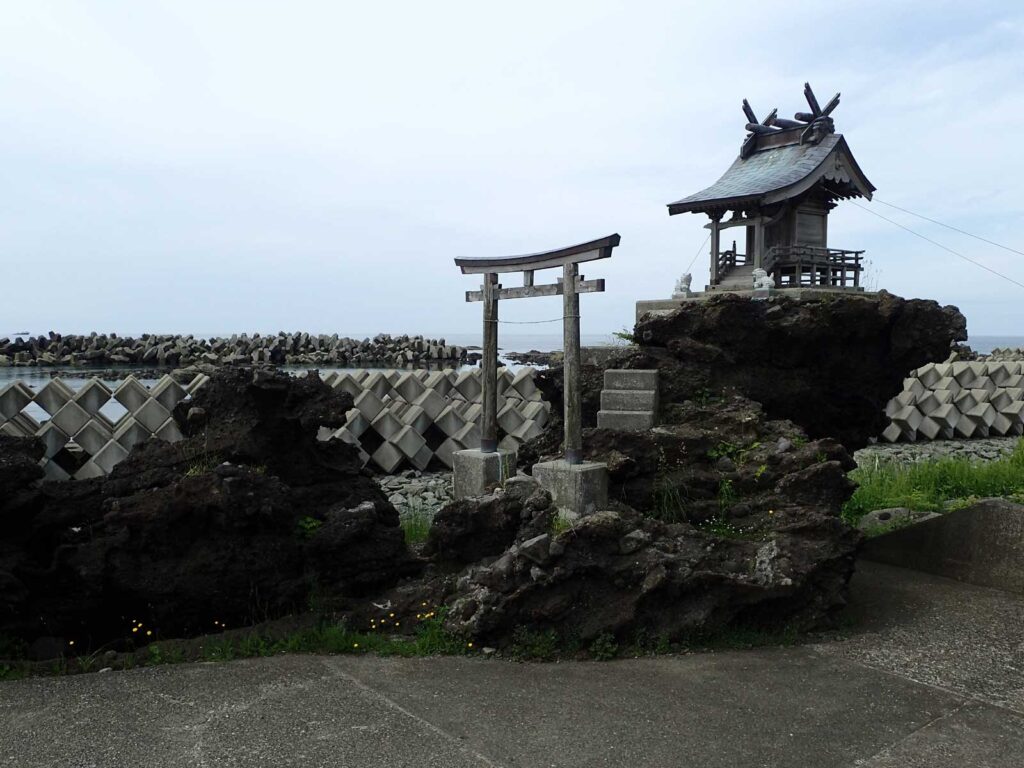
This morning we continued our coasting with a climb to bypass a tunnel that was closed for repairs before we returned to the mostly flat coastal road that only had a few gentle hills to stretch our leg mussels. The shoreline is composed of rugged volcanic rock that centuries of weather and waves have formed into mysterious shapes.
One is known locally as Unseki or the Cloud Shaped Rock in English. There is a shrine at the rock and the local story tells the tale of a battle fought between the indigenous Ainu people who controlled the island of Hokkaido and a Japanese army under the leader Sokechi. The Japanese forces were losing and they had been forced to retreat to the coast in the area of this rock. Suddenly the sky grew dark turning the area as black as night with flashes of lightning and claps of thunder coming from the direction of the cloud shaped rock. The Ainu forces withdrew giving the Japanese time to escape and reform their routed army. Later and under a new leader that army defeated the Ainu. The shrine commemorates this event.
However the story of the Ainu people is not a very happy one. These people are indigenous to the island of Hokkaido and other islands northward all the way to the Kamchatka Peninsula of Alaska. They are closely related to the Aleuts of the Aleutian Islands, as seen in the carving of totem poles by both cultures. After a series of military defeats during the 1600s, they lost territory and influence to the expanding Japanese culture. In 1799 events took a more destructive turn when the shogunate took total control over their homeland. From 1799 to 1806 the shogunate separated Ainu women from their men and husbands, forcing them to marry Japanese men or allowing them to be raped if they refused. The men were moved out of their communities and made to work as slave labor for periods of five to ten years. The result was the decimation of the Ainu population of Hokkaido and the near total assimilation of their people. Today, official estimates of their numbers are put at around 25,000 but could be as high as 200,000. No one knows for sure and most Japanese are unaware of what Ainu ancestry they might have. There is a movement to address this, much as there are movements to address the wrongs done to indigenous people in my home country of Canada as well as in many other countries around the world. It is a dark part of our past that can not be undone but that should be remembered and healed.



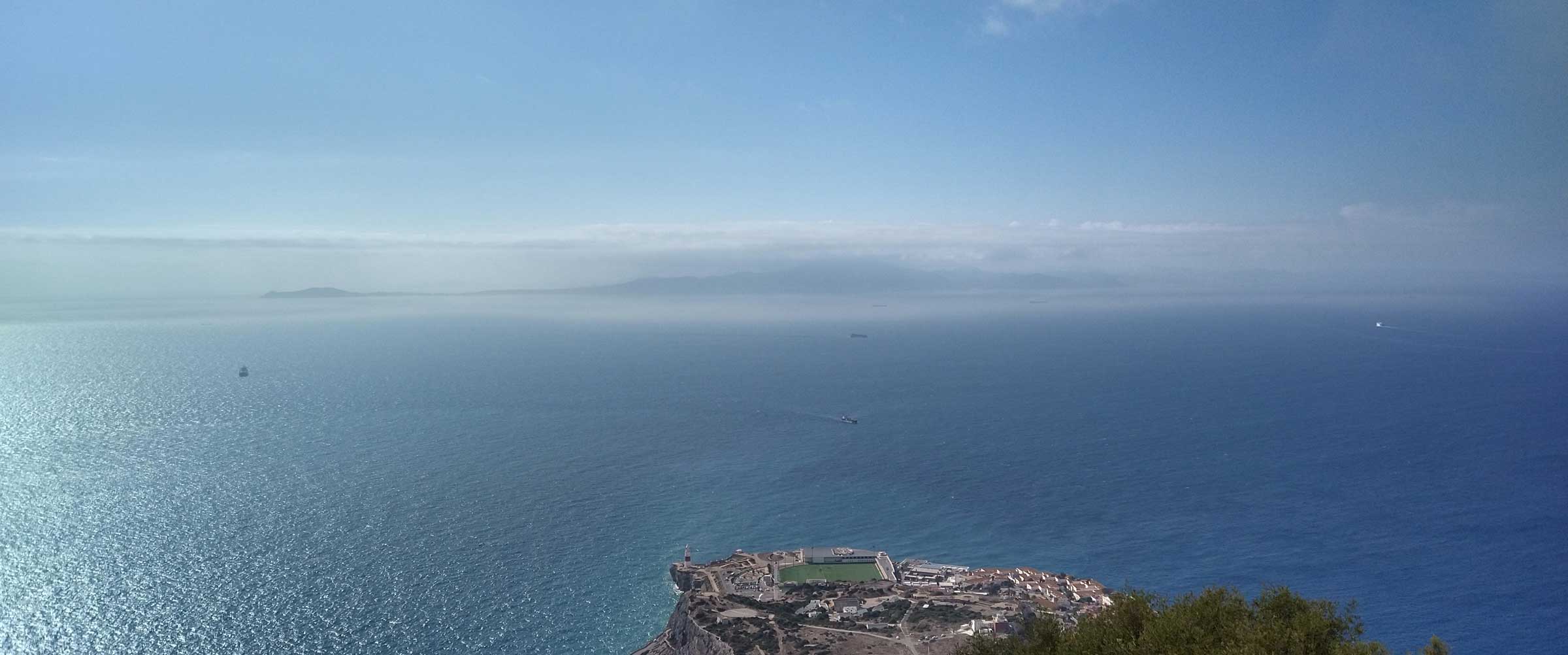
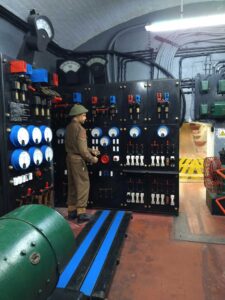
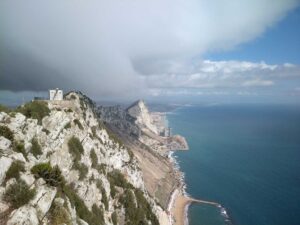 The hike takes you either up a roadway to the top or along a rugged path that follows the contour of land as it climbs and dips along the steep limestone sides of the terrain. We chose the rugged path with its many rock steps and outstanding views of the Mediterranean sea and the continent of Africa just fifteen miles across the straits of Gibraltar. The path leads you past the fortified gun placements, many from World War Two but some from the long history of this British fortress. We climbed our way to the top where the big nine inch guns commanded the straits and could reach out and touch any who should not be allowed to pass. Under the highest battery is a museum display preserving the look of the extensive works required to command these weapons of destruction.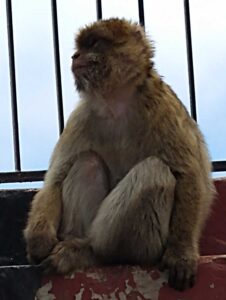
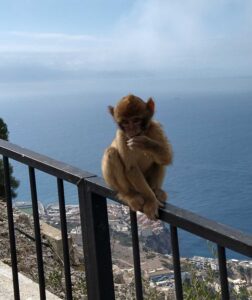 Gibraltar is also home to a troop of Macaques, a cousin of ours from Northern Africa. One local legend says that they came to Gibraltar through a network of caverns that extend under the straits to Morocco. If so, no one has ever found any such a subterranean connection despite determined efforts to do so. It is far more likely that the monkeys arrived on some ship long forgotten in the mists of time. Today they are both an attraction and a pest. They are quite tame and will pose for any number of photographs but watch out if you have anything that looks like food.
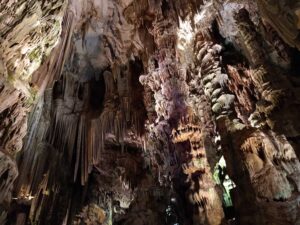 St. Michael’s cave is well worth the visit with some of the most beautiful examples of flow-stone that I have ever seen. While the public portion of the cave is fairly small, the lighting effects and light show really highlight these wonderful limestone formations. There is a good deal of the cave that is not open to the public and there is still exploration of the cave network that undermines Gibraltar. Evidence of Neanderthal occupation from around 40,000 years ago has recently been found in one location. In addition to the caves, there are many miles of military tunnels from Gibraltar’s long history as a fortress. Today it still serves as Britain’s watch-post on the Mediterranean and a projection of England’s military prowess. Spain would like to have it back but that does not appear to be in the cards.
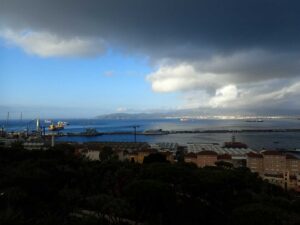 More than a tourist attraction Gibraltar is still a busy port with dry docks and facilities for shipbuilding. Still, tourism is the fuel for its economic engine and that fuel seems to be taking over more and more of the Rock’s real estate. The place is already crowded with steep curving streets, fast moving vehicles and pedestrians who must feel like targets in some road warrior video game. I loved my short visit but would have ulcers if I had to live with this traffic every day.
 The last few kilometers passed through the industrial port city of Algeciras, Spain with its refineries and chemical plants. If I did not know better I could imagine that I was in New Jersey.
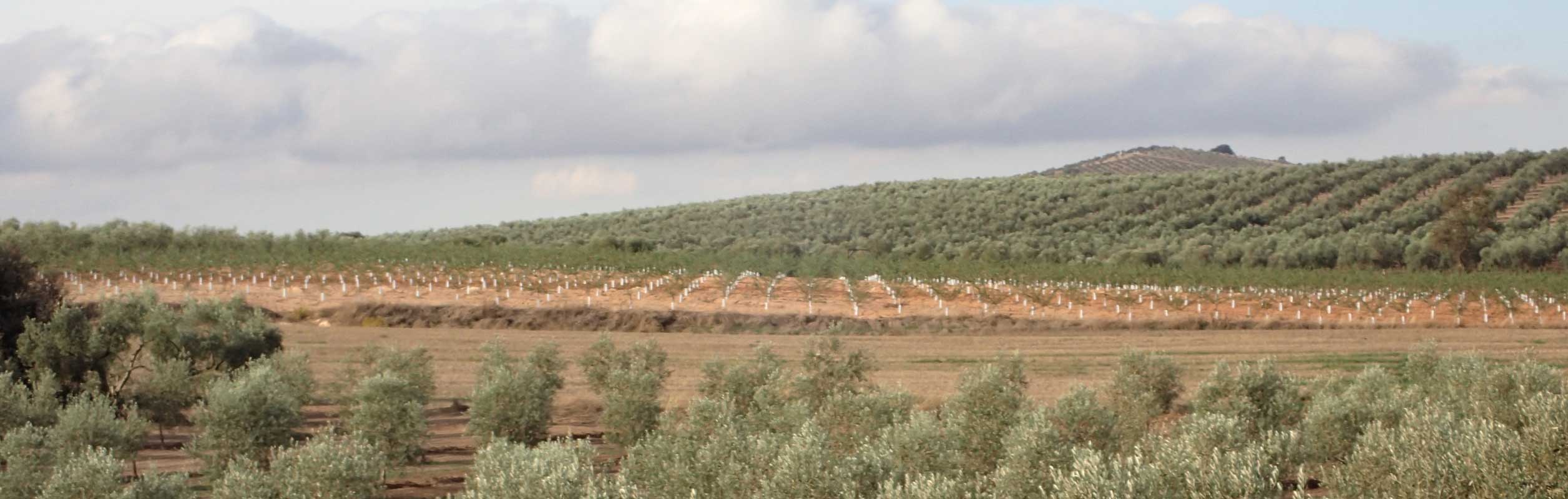
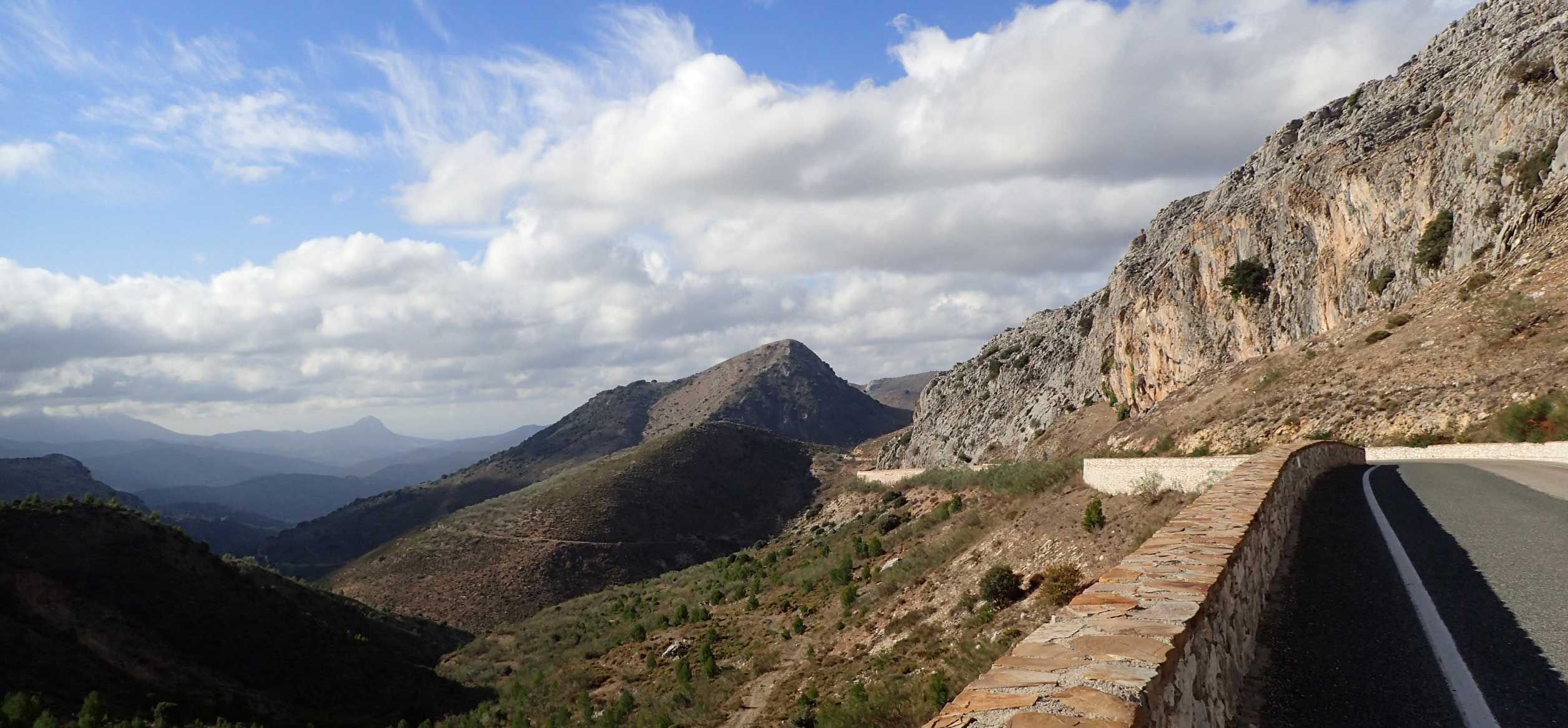
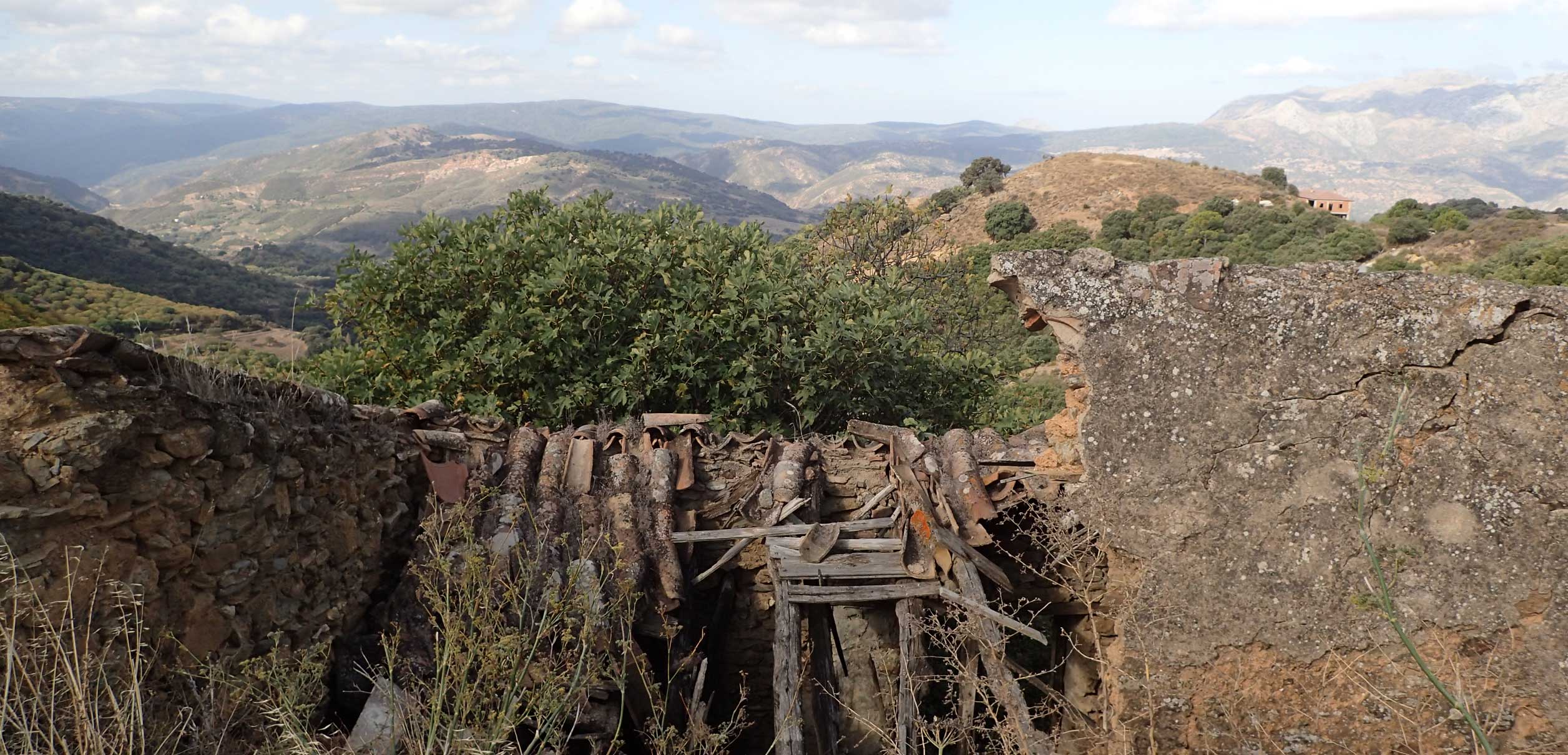
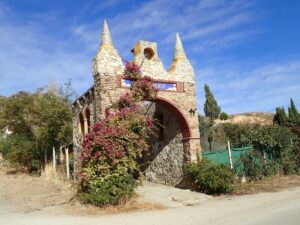 Our next to the last day of riding turned out to be more of a challenge than we anticipated. We had assumed that from Granada it would be mostly downhill to Gibraltar but it was not to be. First we had to spend our last Spanish night in the city of Ronda and Ronda sits high above a deep gorge. To get to Ronda we passed through the usual olive groves and into some foothills with steep climbs along rural back roads. Instead of be more downs than ups we had to climb a total of 1325 meters (4300 feet) and most of that during the second 45 kilometers of our 90 kilometer ride. While we have done longer rides with more climbing, today just seemed especially hard. Maybe it was because our expectations did not match reality. In any event, after a ride through some beautiful countryside we finally arrived in Ronda and our last night in Spain.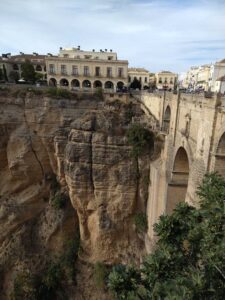
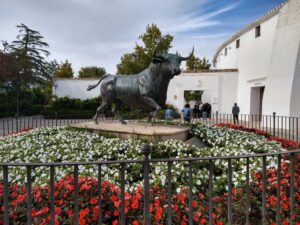
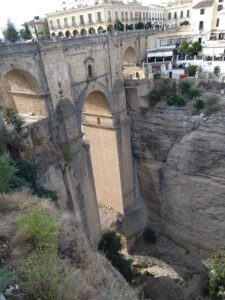 Ronda is an interesting town and quite a tourism destination. It sits high above a deep and narrow gorge and offer some fantastic views and even some cliff side dining if you like. The town is also known for it bullfighting museum and well preserved bullfighting arena. Is is also known for being the final resting place for the ashes of Orson Welles.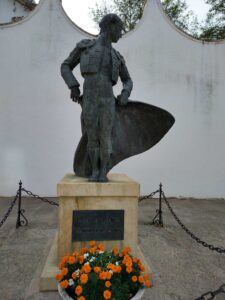
 was fascinated by the Spanish bullfighting culture and even took part in a few amateur bullfights as a teenager. Like Hemingway he sided with the republican side during the Spanish Civil War using his vocal talents on his radio program to influence the intellectual community to support their cause. He and Hemingway eventually met during the production of Hemingway’s movie, The Spanish Earth, which Welles narrated.
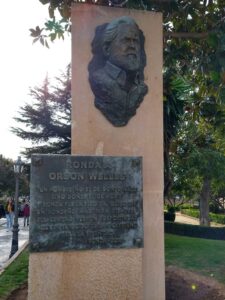 Welles strongest connection with Spain was through the Spanish actress,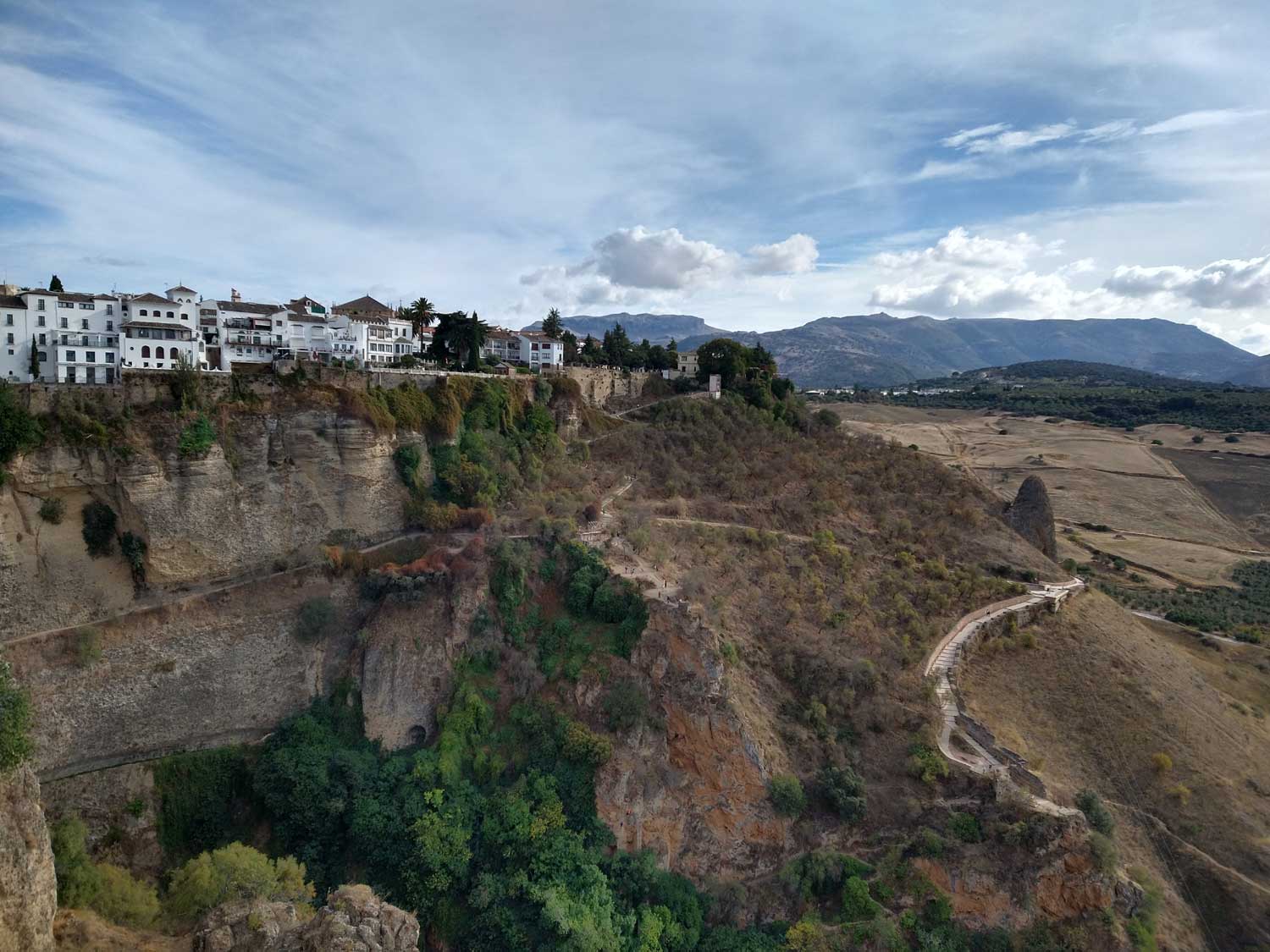
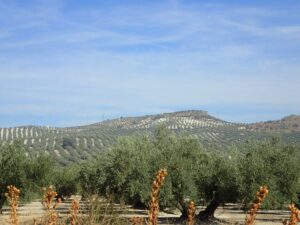 As the sun is rising ever later in the day so too are our daily journeys beginning later. We left Granada at a leisurely 9:30 for a 110 kilometer ride to our next overnight stay in the town of Antequera. Leaving the city we were quickly back into the olive plantations that seem to dominate this part of Spain. They truly are everywhere extending far up mountainsides wherever there is land that can sustain them. Irrigation networks throughout the region move the water through what is essentially a fairly dry landscape. As with many things in Spain, even the aqueducts are built with an architectural flair.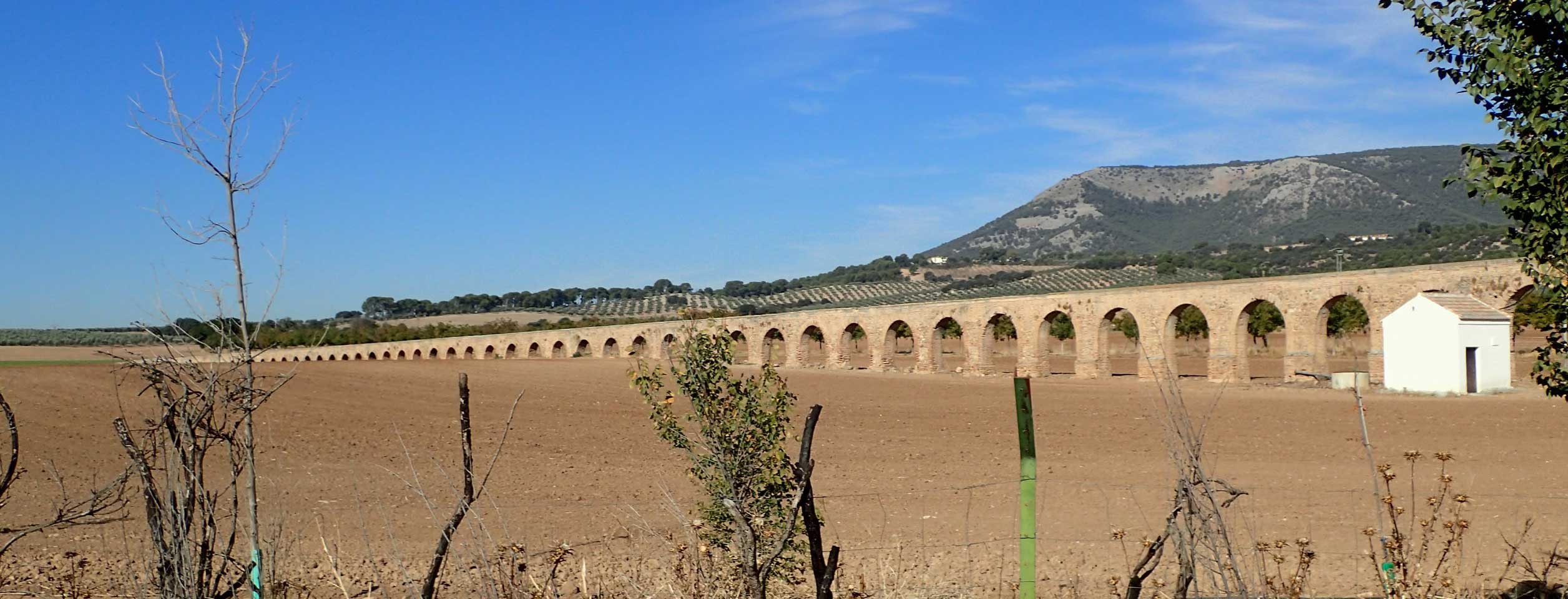
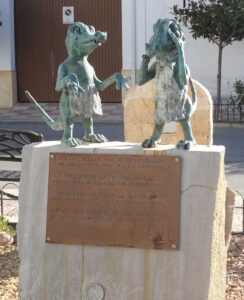
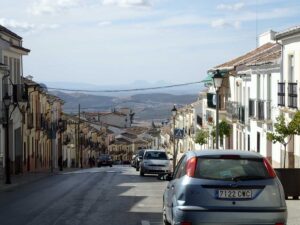
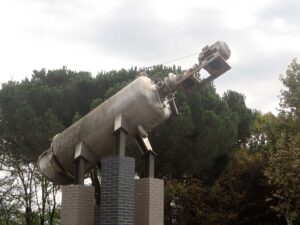 Along the way we passed through many small towns carved into the landscape. Often they have unusual artworks decorating their traffic circles and even some that are hard to understand as in the two examples I have shown.
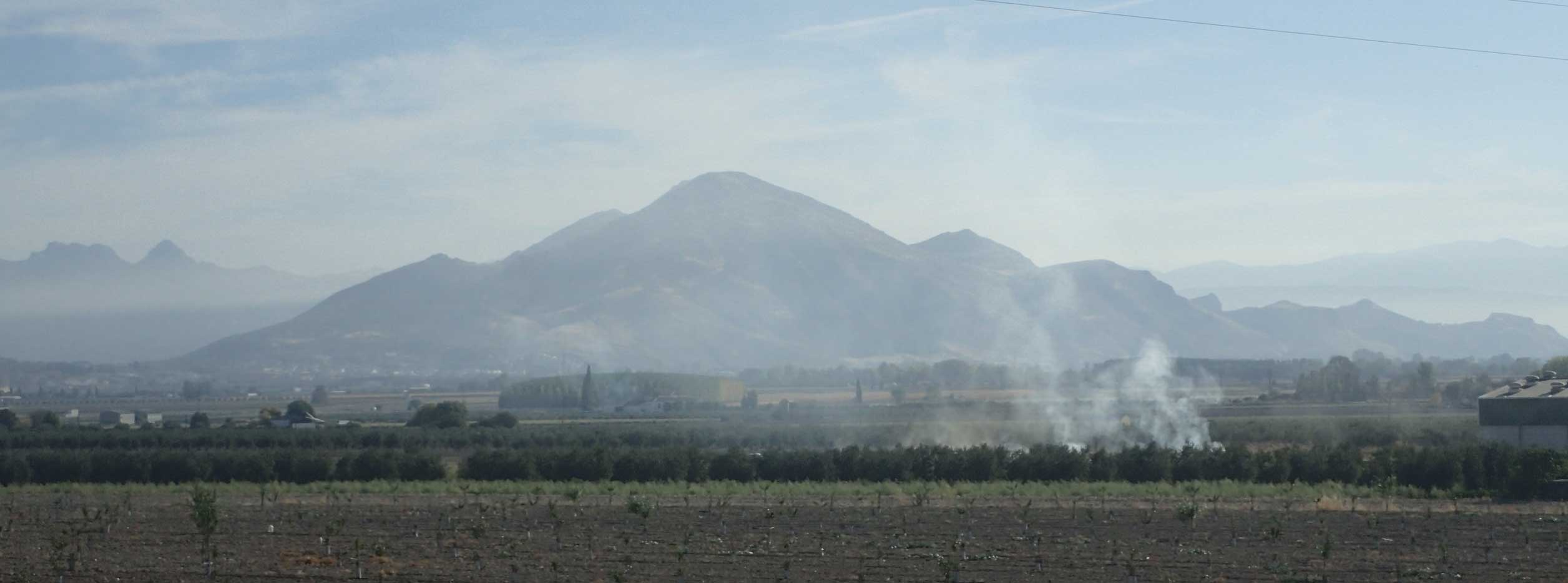
 The skies have had a smoky quality ever since we entered into any orchard farming region and this is especially true of the Andalusian region in the south of Spain. Orchards require pruning to keep the trees productive and this is especially true of olive trees. The fall seems to be the best time to do this and the result is a fog like layer of smoke that fills the horizon. Every orchard seems to have plumes of smoke rising from multiple points. Some are small fires and some like then one in the photo are the result of larger pruning activities. Riding through these, especially when going uphill can result in some unpleasant breathing but thankfully, such episodes are short. in duration.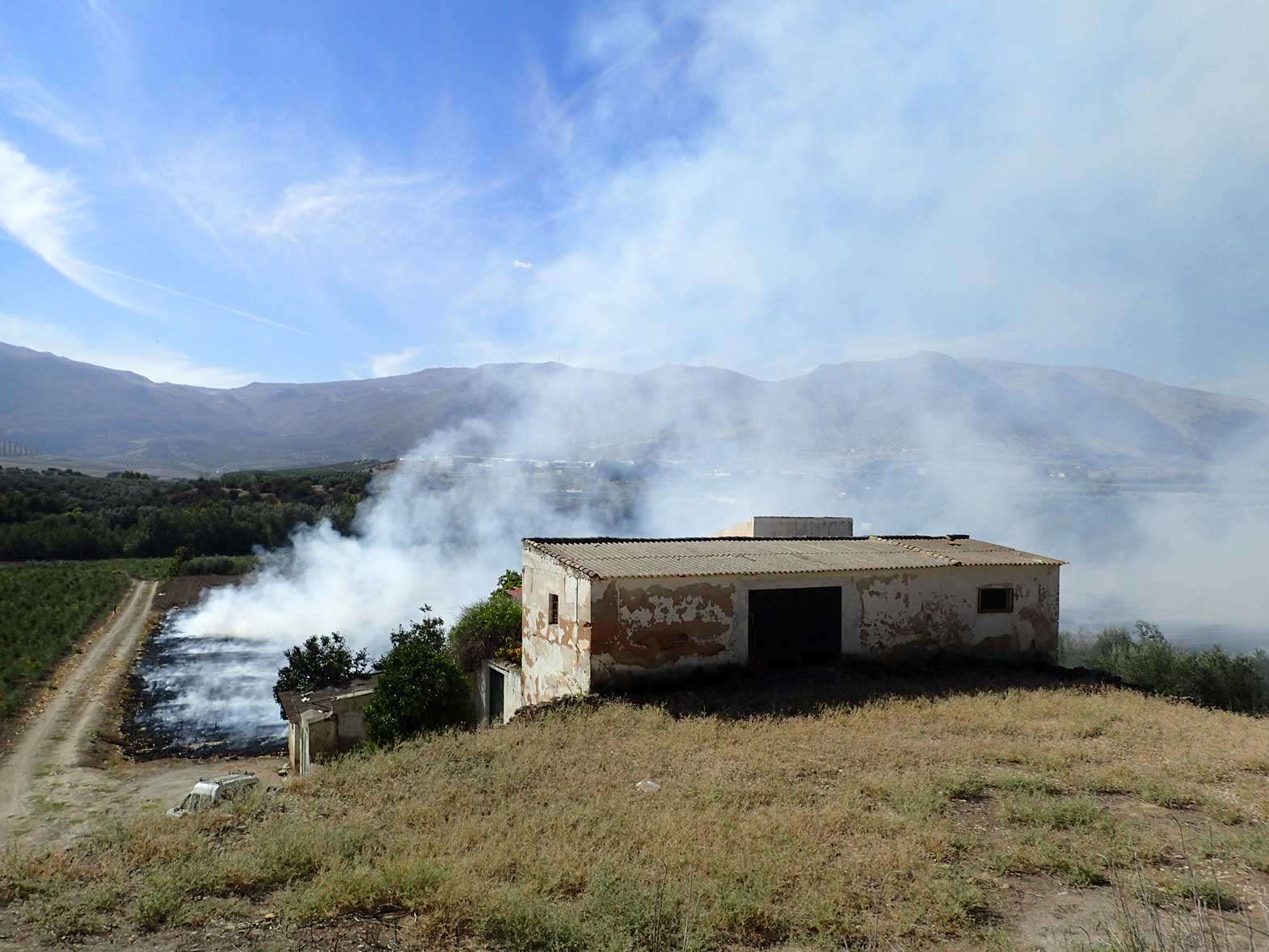
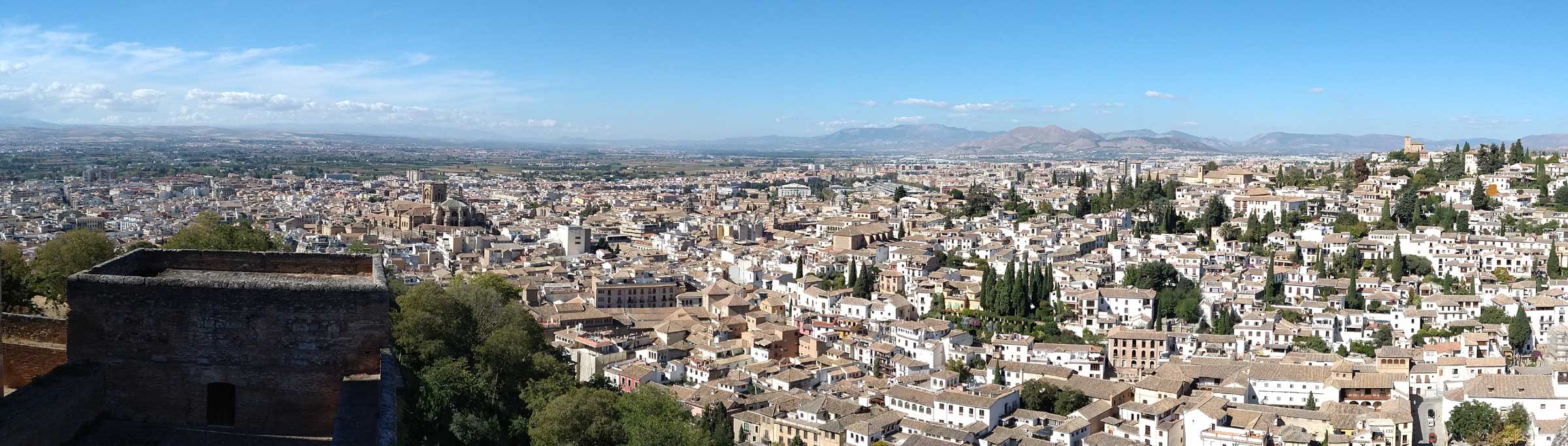
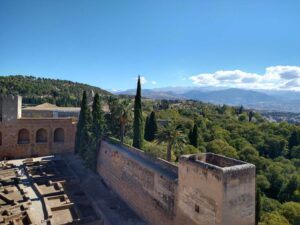 Granada’s big attraction is Alhumbra. This is a magnificent fortress topping a high hill above the city that has been lovingly restored after a long and violent past. It was built over the remains of an old Roman fortress that was abandoned and allowed to fall into ruins, a fate that has happened to this location more than once over the centuries.
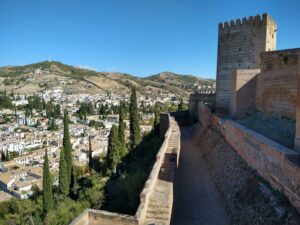 With the completion of the Christian Reconquista in 1492 the Sultan was tossed out and the palace became the royal court of Ferdinand and Isabella where Columbus received his royal endorsement for his chance encounter with America. Fred and Issy were buried there for awhile until the rent increases made relocation to a state sponsored location more affordable.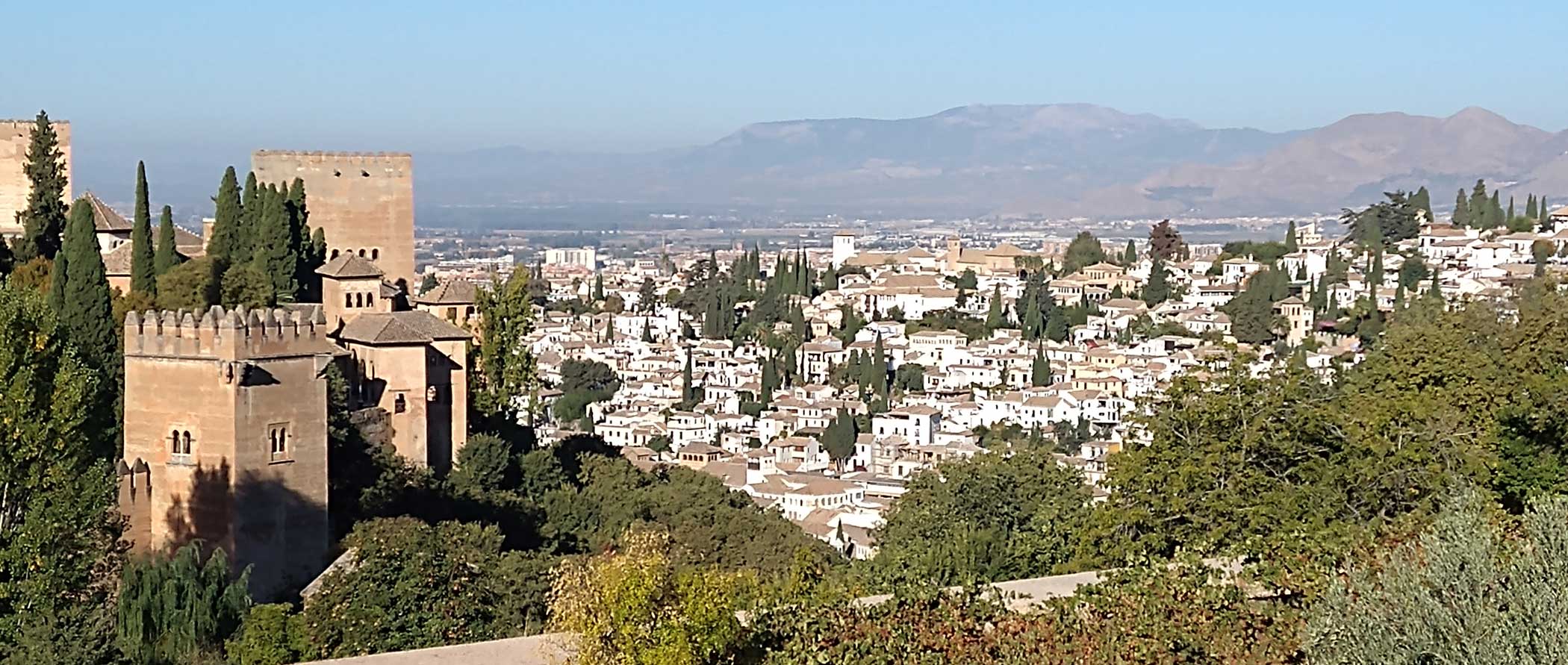
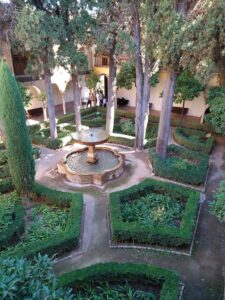
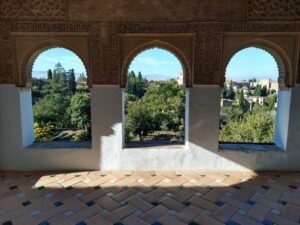
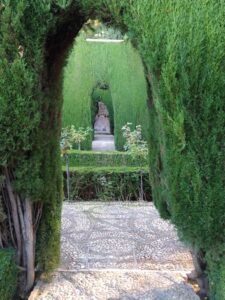
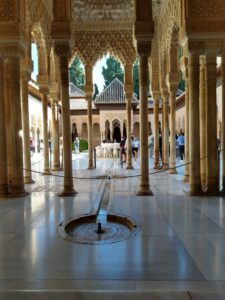
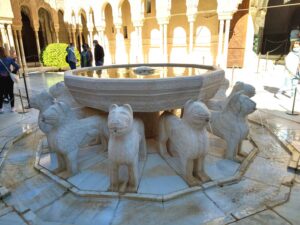
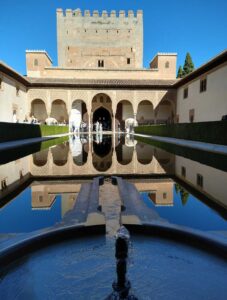 Regardless of what prompted the restoration, Alhambra today is magnificant. The gardens, fountains and restored palaces are well worth the time spent to see how this World Heritage Site must have looked in its glorious past. If you come, don’t just walk around, take a guided tour. The information they provide is well worth the additional cost. Be sure to bring your passport as identification is checked many times throughout a visit due to the large business in counterfeit admission tickets. As for anything else I have to say, I’ll let some pictures speak a thousand words.